
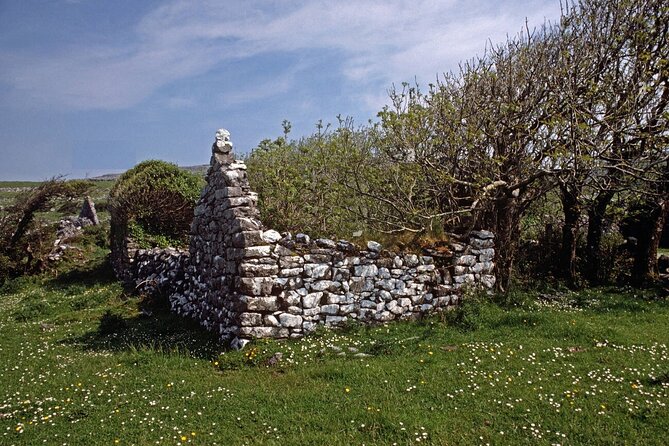
REVIEW · MUSEUMS
Irish Famine Museum / Exhibition Dublin
Hard history in one hour. The Irish Famine Museum in Dublin tells the story of the Irish Potato Famine at a steady pace, and I like that you can book admission in advance to skip entrance lines. You’ll get a mobile ticket and then settle in to see what the exhibition wants you to notice, without a group march.
I also like the self-guided setup, so you can spend time where it hits you, and skim what you already know. The format is straightforward: museum objects and photos, plus a short documentary that breaks up the reading.
One thing to consider: this is a pop-up-style exhibition in a mall space, and the room where the film plays can run warm, so plan to dress in layers.
In This Review
- Key things to know before you go
- Where this Irish Famine Museum is, and what the visit feels like
- What you’ll see inside: Great Hunger storytelling through objects and visuals
- The self-guided route that lets you move at your own pace
- The 15-minute documentary film, and how to make it comfortable
- Context that makes the Great Hunger story feel less distant
- Language options: using the translation guide without slowing down
- Price and value: is $18.15 worth your time?
- Who should book this Irish Famine Museum in Dublin?
- Should you book the Irish Famine Museum exhibition?
- FAQ
- Where does the Irish Famine Museum exhibition start?
- How long is the Irish Famine Museum exhibition?
- Is the visit self-guided?
- What is included with the admission ticket?
- What languages are available?
- How much does it cost, and when is it open?
- Can I get a full refund if I cancel?
Key things to know before you go
- Skip the entrance line with an advance admission booking
- Plan for about 1 hour, since it is designed as a self-guided loop
- Expect rare aerial views of St. Stephen’s Green to add an unexpected visual angle
- Watch a short 15-minute documentary, included with admission
- Look for original objects like an original soup pot and period newspapers
- Use the translation guide if you want help in French, German, Italian, or Spanish
Where this Irish Famine Museum is, and what the visit feels like
This exhibition is set in the St. Stephen’s Green Shopping Centre area in Dublin, and it runs as a temporary installation during 2026, from April through September. The opening hours listed are daily from 12:00 PM to 6:00 PM, so you can usually fit it into a lunch-to-afternoon window.
Because it is located inside a shopping centre, the vibe is not grand museum halls or hushed galleries. It feels more like a focused pop-up space, with an emphasis on interpretation through posters, photos, and a few key artefacts. One review summed up the format as lots of information presented as you walk and read around the rooms, with the main audio-visual moment being the film.
That matters because it changes who will enjoy it most. If you like history you can absorb on your own terms, this works well. If you are hoping for a hands-on, guided, multi-sensory experience, you might feel like something is missing.
Still, the structure is efficient. At around an hour, you can walk in, understand what the exhibition is trying to say, watch the film, and leave with a clearer picture of why so many Irish people experienced such severe hardship, and why emigration followed.
More Museum Visits in Dublin
- Irish Rock ‘N’ Roll Museum Experience Dublin
★ 5.0 · 6,112 reviews - The Little Museum of Dublin Famous Guided Tour
★ 5.0 · 2,948 reviews - Dublin EPIC Museum Admission Ticket
★ 4.5 · 1,729 reviews
What you’ll see inside: Great Hunger storytelling through objects and visuals
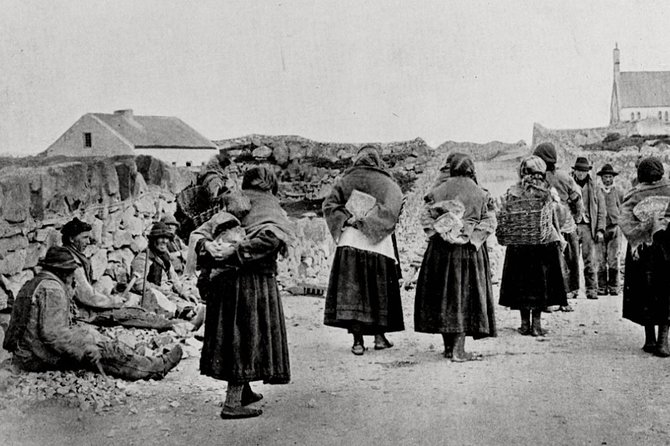
The exhibition is built around the Irish Potato Famine, also known as the Great Hunger. Rather than presenting it as a mystery box of dates and names, it aims for comprehension: what happened, how long it lasted, and what decision-making failures made a crisis worse.
In practical terms, you should expect a lot of 19th century photos and explanatory posters. Reviews describe it as text-heavy compared to some museum experiences, so bring patience for reading in a standing, walking format. The upside is that the information is presented in a simple, direct way, which helps if your goal is to understand the basics without needing prior background.
You will also see some real touchpoints that make history feel less abstract. The exhibition includes an original soup pot, and period newspapers are part of the display. Those objects do a lot of emotional work in a small amount of space. You are not just reading about a famine, you are seeing physical items that suggest daily life and scarcity.
A detail I found especially interesting is that the exhibition includes rare aerial views of St. Stephen’s Green. That is not the most obvious thing you would expect from a famine-focused exhibit, but it gives you a sense of place and time. It helps connect Dublin as a living city to the wider story of what the famine meant for people in Ireland and beyond.
The self-guided route that lets you move at your own pace

Admission here is set up so you move through the exhibition on your own. There is no requirement to keep up with a guide, and the flow is designed so most people can finish in about an hour. That is a real advantage if you have limited time in Dublin or you just want control over how quickly you read and process information.
For me, the best way to use a self-guided exhibit like this is to do two passes, even if you only have one hour. First pass, scan the rooms for the big ideas and look for the objects that anchor the story, like the soup pot and newspapers. Second pass, pause at the sections that feel emotionally or politically important, then watch the film with those thoughts in mind.
If you do not like reading lots of posters, this one can feel like a trade-off. Multiple comments specifically called out the experience as a pop-up that you understand by walking around and reading, with a short film providing the only major audio-visual break. Still, even if you prefer video, the film works best if you already have a few key points from the posters.
One more practical detail: staff are available and were described as helpful. If you get confused about where to go next or when the film plays, ask. In a self-guided setup, a quick question can save you time and keep you from missing a section.
The 15-minute documentary film, and how to make it comfortable
The included documentary is about 15 minutes. It is a smart piece of programming, because it interrupts the reading mode and gives the story a more guided rhythm. Reviews also describe it as affecting, and one person highlighted how the exhibit clarified why emigration surged after the famine.
In a normal climate-controlled museum, the film would be an easy pause. Here, at least for some visitors, comfort was an issue. One review noted the film area was too warm, which you should treat as a heads-up. If you tend to feel uncomfortable in warm rooms, bring layers you can adjust, and consider going earlier in your time window if you are sensitive to heat.
How you watch matters too. If you want the film to stick, avoid the urge to multitask. Give it your full attention, then go back to the nearby posters after. The film is not just a wrap-up, it can help you connect the political decisions and response failures to the lived reality the rest of the exhibit shows.
Even for people who already know the basic facts about the potato famine, the documentary can change how you think about it. Several reviews used phrases like simple truths and government response, suggesting the film and surrounding text emphasize accountability and cause-and-effect.
A different sort of day out in Ireland:
- Dublin to Cliffs of Moher, including Wild Atlantic Way and Galway
★ 5.0 · 23,331 reviews - From Dublin: Cliffs of Moher, Burren & Galway City Day Tour
★ 4.8 · 18,888 reviews - Dublin: Guinness Storehouse Entry Ticket
★ 4.6 · 16,863 reviews - Dublin to Cliffs of Moher, Burren, Wild Atlantic Way, Galway Tour
★ 5.0 · 12,924 reviews
Context that makes the Great Hunger story feel less distant
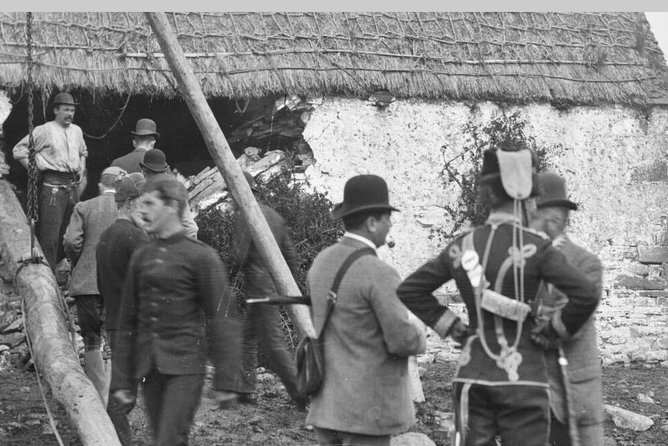
The Irish Potato Famine is not only a story about weather or crops. This exhibition frames it as a crisis shaped by political choices, slow disaster response, and unequal power. That is why the exhibit can feel emotionally intense, even when it is presented in plain, organized language.
One strong theme that comes through is the contrast between what was happening and what governments and landowners did or did not do. Some reviews focused on the idea of incompetent leadership and poor prioritization, including claims about spending priorities, and the wider lack of effective aid. Another common thread was outrage at how slow the response was, and how the disaster became larger over time because help did not arrive fast enough.
You’ll also see the human consequence in the way the exhibit connects famine to emigration. One review specifically mentioned learning why millions of Irish people left, and how the famine became a reason for emigration. Even if you have heard these numbers before, the exhibition’s approach helps you see them as part of a single chain: crisis, suffering, and then departure when survival becomes impossible at home.
If you care about how history repeats itself, you may notice the same kind of discussion that comes up when societies face agricultural shocks. One review explicitly linked the famine to later concerns about wheat and other crises. That sort of comparison is not required, but if it is your thing, this exhibition gives you enough grounding to think clearly, not just feel vaguely sad.
Language options: using the translation guide without slowing down
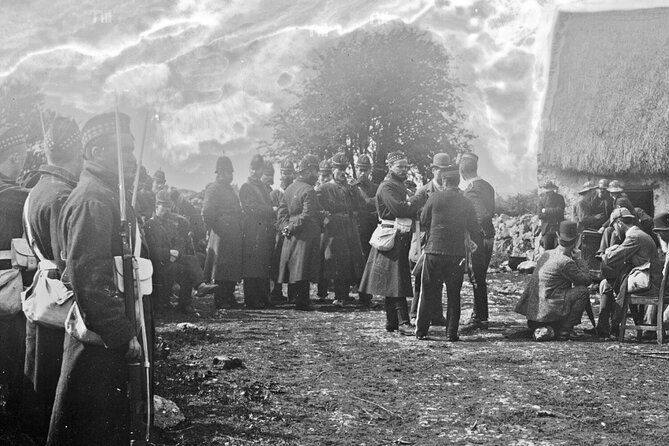
The exhibit is offered in English, but you can also use a translation guide in French, German, Italian, and Spanish. That is a big deal in a self-guided museum, because it lets you keep moving at your own pace while still understanding the details.
Here is the practical approach I recommend: pick up the guide at the start, then decide how you want to use it. If your English is strong, you might only switch to the translation when you hit a section that feels politically specific or concept-heavy. If you prefer full comfort, use the guide steadily so you can read without guessing.
Because the exhibit relies on posters and text, translation support can make the difference between an okay visit and a really satisfying one. Reviews also suggest the story is presented in simple facts, which helps translation work too. Instead of struggling through dense academic language, you are translating a narrative built for comprehension.
Price and value: is $18.15 worth your time?
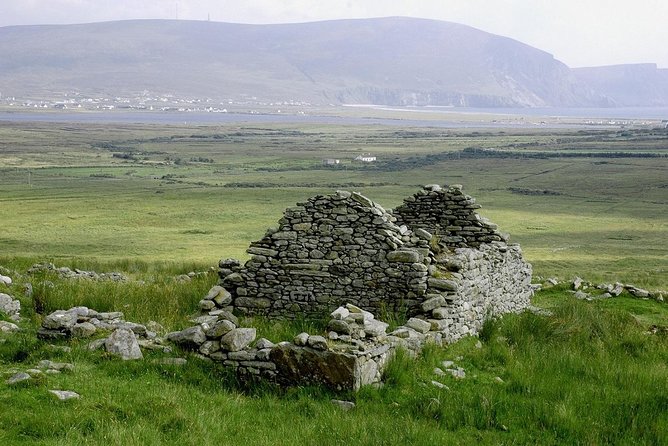
At $18.15 per person, this is not free, but it also does not feel like a premium-priced spectacle. The value comes from three things working together: the one-hour duration, the included documentary, and the mix of photos plus tangible artefacts like the soup pot and newspapers.
If you are visiting Dublin with a tight schedule, the one-hour timebox is a big plus. Many people spend that long just walking around city streets anyway. Here, you get a focused, structured lesson with an emotional payoff.
The experience is also designed for a smaller flow, with a maximum of 90 travelers listed. That suggests you should not be elbow-to-elbow in a cramped space for the whole visit. Still, since it is self-guided, your comfort will depend on when you go and how busy the mall area feels.
One more value point: advance booking is encouraged for skipping entrance lines. Paying attention to that detail matters more here than in some museums, because the exhibition space is in a temporary setup where efficient entry helps you start faster and settle in before the film window.
Who should book this Irish Famine Museum in Dublin?
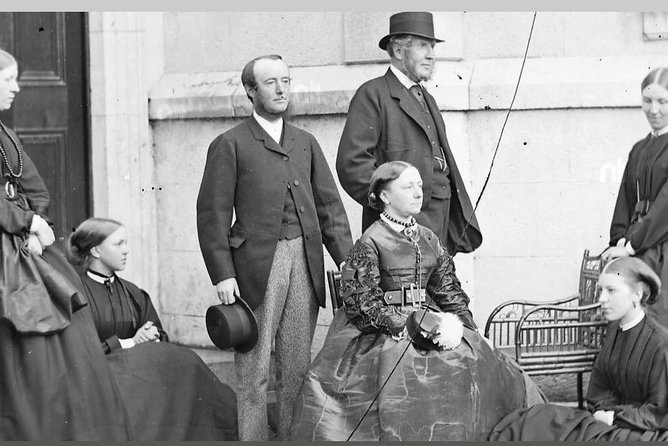
This is a strong fit if you want a focused, self-guided understanding of the Irish Potato Famine and how political decisions worsened an agricultural crisis. It is especially good for travelers who read well on the go and do not need a highly choreographed guided tour.
You’ll likely enjoy it if you:
- want a museum experience that fits into about an hour
- prefer self-paced learning over following a group
- want a clear story supported by objects like a soup pot and period newspapers
- appreciate a short documentary as a mental reset during the walk
You may want to think twice if you:
- strongly prefer climate-controlled spaces, since the film area was noted as warm
- dislike reading lots of posters and want a more interactive show
- expect a full guided narration, since this is largely self-directed walking and reading
It can also work for families, as long as children are with an adult. Just be ready for serious subject matter, and allow time for questions, not just a quick pass-through.
Should you book the Irish Famine Museum exhibition?
If your goal is a clear, structured one-hour introduction to the Great Hunger, I’d book it. The combination of advance tickets, a short included film, and real objects like an original soup pot makes the experience more than just posters on a wall. Plus, the self-guided format means you can pause, read at your speed, and leave when you feel you have what you came for.
Book it if you value understanding over entertainment. Skip it if you want a guided, ultra-comfortable, hands-on museum day. And if you are sensitive to heat in indoor rooms, choose a time when you feel most comfortable, because the film area can run warm.
FAQ
Where does the Irish Famine Museum exhibition start?
The experience starts at Stephen’s Green Shopping Centre, St Stephen’s Green, Dublin, D02 HX65, Ireland.
How long is the Irish Famine Museum exhibition?
It is approximately 1 hour.
Is the visit self-guided?
Yes, it is self-guided, so you can move through the exhibition at your own pace.
What is included with the admission ticket?
Admission includes entry to the exhibition and a short documentary film.
What languages are available?
The exhibition is offered in English, and a translation guide is available in French, German, Italian, and Spanish.
How much does it cost, and when is it open?
The price is $18.15 per person. The listed opening hours are 12:00 PM to 6:00 PM daily, during 04/01/2026 to 09/30/2026.
Can I get a full refund if I cancel?
Yes. You can cancel up to 24 hours in advance for a full refund. If you cancel less than 24 hours before the start time, the amount paid is not refunded.
Freshly listed around Dublin
- Wicklow Mountains Private Day Tour including Glendalough★ 5.0 · 7 reviews
- Wicklow: Private Day Tour from Dublin★ 5.0 · 5 reviews
- Women Of Ireland: Trailblazers & Pioneers★ 5.0 · 4 reviews
- Full Day Private Wicklow Tour★ 5.0 · 12 reviews
- Wicklow tour of Glendalough★ 4.5 · 8 reviews
- Wicklow Mountains & Glendalough Luxury Private Day Tour★ 5.0 · 23 reviews
- Premium Irish Whiskey Tasting Hosted by Local Dublin Expert★ 5.0 · 77 reviews
- Whiskey Tasting Tour of Dublin★ 5.0 · 117 reviews
Museums, compared.

The Little Museum of Dublin Famous Guided Tour
Read our review →

Giant’s Causeway with the Titanic Exhibition and the best of Northern Ireland
Read our review →


Irish Whiskey Museum: Whiskey Blending Experience
Read our review →
Irish Whiskey Museum Blending Tour with Tastings
Read our review →Browse the lists this tour appears in