
REVIEW · IRELAND
Kildare: Irish National Stud & Gardens
Horse fans, you will love this day out.
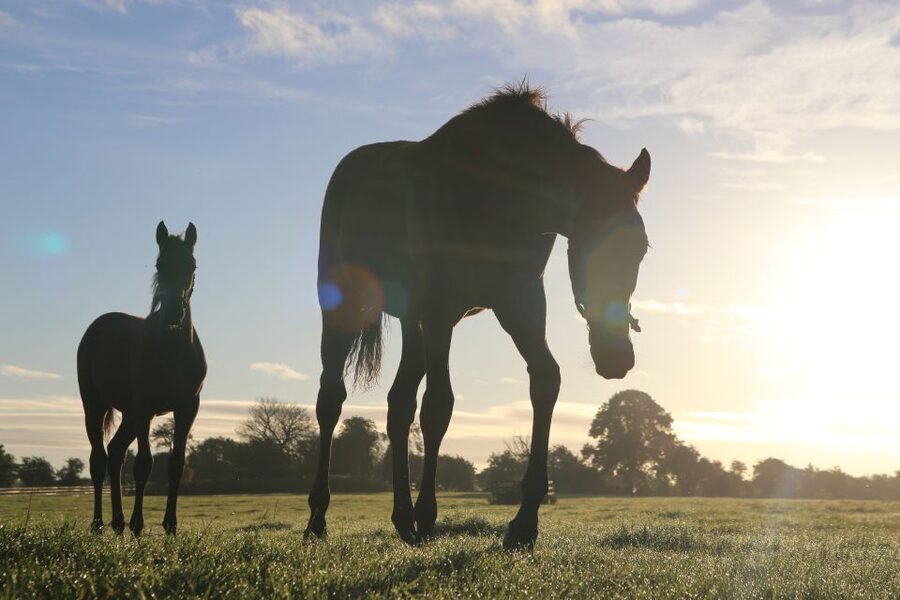
The Irish National Stud and Gardens in Kildare is one of the only thoroughbred breeding farms open to the public, and it feels like walking right into the real work behind racehorse creation. I like how the stallions, mares, and foals viewing is built into the day with an actual public tour, and I also love the two very different gardens, especially the Japanese Gardens. One drawback to plan around is the fixed schedule, including the last entry at 5:00 PM, so you need to time your arrival for the public tour slot and the Irish Racehorse Experience.
Set about 40 minutes outside Dublin on 850 acres, this ticket is a full day of horses plus calm garden time, with an award winning Interactive Irish Racehorse Experience running from 11:00 to 4:00. You’ll also see retired racing stars on the Living Legends area, with names like Hurricane Fly among the headline horses.
In This Review
- Key highlights that make this ticket worth it
- Irish National Stud in Kildare: a real working farm, plus gardens
- Price and value: what $22 buys in real time
- Timing your visit: tours and the racehorse experience window
- The public tour of stallions, mares, and foals
- Living Legends: retired racing stars grazing and telling stories
- Japanese Gardens: an oasis of calm with a thoughtful path
- St Fiachra’s Garden: Irish style, native species, and wildlife spotting
- Inside the award winning Irish Racehorse Experience
- How long to plan for (and what to do first)
- Weather, seasons, and when the stud is most active
- Who will enjoy this most
- Should you book the Irish National Stud and Gardens?
- FAQ
- What is the price for Kildare: Irish National Stud and Gardens?
- How long does the visit take?
- What times do the public tours run?
- What are the opening hours for the Irish Racehorse Experience?
- Is the Irish Racehorse Experience suitable for children?
- What is the last entry time?
- What horse areas and retired horses can you see?
- Is a guided tour included with the ticket?
Key highlights that make this ticket worth it
- A thoroughbred breeding farm you can walk through, not just a museum
- Public tours with a live guide that focus on stallions, mares, and foals
- Japanese Gardens and St Fiachra’s Garden, two very different styles in one visit
- Living Legends with retired stars, including Hurricane Fly, Beef, Salmon, and Faugheen
- Interactive Irish Racehorse Experience with a horse box and a simulated race day
- A day that works even when the weather is moody, since the experience includes indoor stops too
Irish National Stud in Kildare: a real working farm, plus gardens
The Irish National Stud and Gardens is set on rolling green grounds in County Kildare, about 40 minutes from Dublin. It is not a quick roadside stop. It’s a full property day, spread over 850 acres, where horses and gardens are the point.
What makes it different is that you are not only seeing horses, you are seeing a breeding operation that is designed to be understood by visitors. The day includes views of stallions, mares, and foals, plus scheduled public tours. If you like your sightseeing with a story you can follow, this works well because the experience is organized around the life cycle of a thoroughbred.
Then you get the other half of the appeal: the gardens. The Japanese Gardens offer an oasis of calm, while St Fiachra’s Garden is inherently Irish in theme and full of native species and Irish wildlife to spot. That split is handy. Even if your group is split between horse lovers and garden lovers, you will all have something to focus on.
More around Ireland worth an open tab:
- Dublin to Cliffs of Moher, including Wild Atlantic Way and Galway
★ 5.0 · 23,331 reviews - From Dublin: Cliffs of Moher, Burren & Galway City Day Tour
★ 4.8 · 18,888 reviews - Dublin: Guinness Storehouse Entry Ticket
★ 4.6 · 16,863 reviews
Price and value: what $22 buys in real time
At $22 per person for the day, this ticket can be good value if you actually use what’s included. You are not paying only for a self-guided stroll. The ticket includes entrance to the stud and gardens plus the Interactive Irish Racehorse Experience, and it also includes a public tour with a live guide.
Here’s the value math that matters for planning: the day is built around timed elements. There are public tour start times, the Irish Racehorse Experience runs 11:00 to 4:00, and the last entry is 5:00 PM. So you get your money’s worth when you treat the day like a schedule, not like wandering when you feel like it.
Also, there’s a practical flexibility angle. Reserve now and pay later is offered, and free cancellation is available up to 24 hours in advance for a full refund. That means you can book now, then adjust based on your Dublin plans.
Timing your visit: tours and the racehorse experience window
Your biggest planning job is matching your arrival time to the tour and the interactive experience.
Public tour times include 10:30, 12:00, 2:00, and 4:00 as standard. In summer months, tours run more often, with additional slots at 1:00 and 3:00. From October onwards, tours wind down and the public tour times become 11:00 and 2:00.
Then there’s the Irish Racehorse Experience. The interactive experience opens from 11:00 to 4:00. The last entry for the site is 5:00 PM, so you cannot plan on arriving late and catching everything.
A simple strategy: if you can, aim for a mid-day start so you can do both the racehorse experience and a public tour without rushing. If you arrive early, you can walk the grounds at a slower pace. If you arrive later, you may have to choose which piece gets your full attention first.
The public tour of stallions, mares, and foals
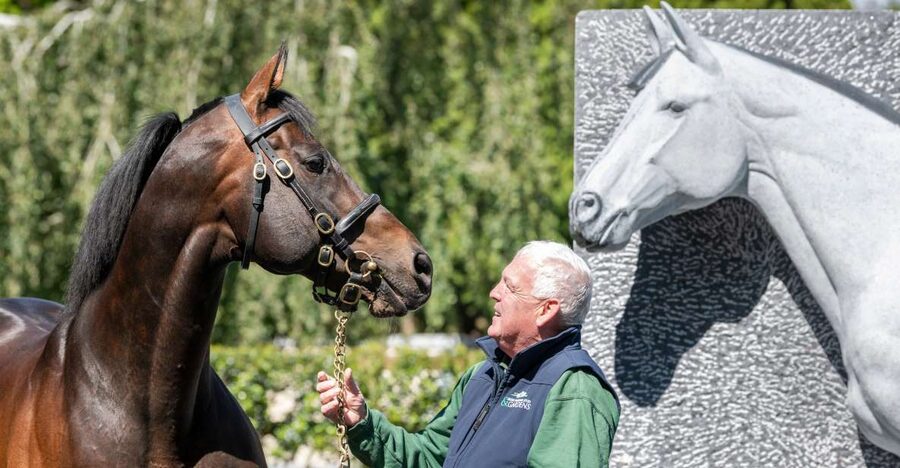
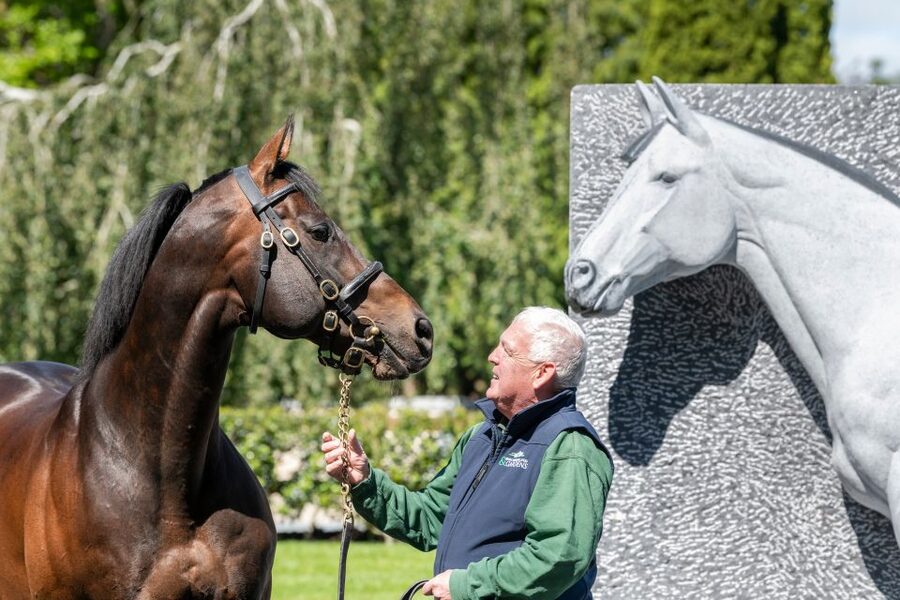
Once you’re on site, the heart of the day is the public tour through the stud areas. This is where the breeding farm becomes more than scenery. You are guided through what you’re seeing, with a focus on the breeding setup and the horses you can view.
The viewing areas are designed to show multiple categories, not just one type of horse. You’ll see stallions, protective mares, and foals. The foals part tends to be the emotional payoff for first-time visitors because they make the whole concept feel immediate, not abstract.
The guiding matters here. I like that the tour isn’t treated as a quick script. In the experience, the guide’s role is central to understanding how selection works and what the farm is trying to do. Some guides I’ve seen highlighted for their enthusiasm include Sue and Amanda, and their talks are the kind that turn names into meaning.
A note for family planning: the Irish Racehorse Experience is not available for children under age 7 unless accompanied by an adult. If you’re traveling with younger kids, you may still enjoy the farm and gardens, but you’ll want to plan around what the interactive portion will allow.
A different sort of day out in Ireland:
- Dublin to Cliffs of Moher, Burren, Wild Atlantic Way, Galway Tour
★ 5.0 · 12,924 reviews - Dublin to Belfast Black Cab, Dunluce Castle and Giant’s Causeway
★ 5.0 · 7,954 reviews - Kilkenny, Wicklow Mountains & Glendalough Day Tour from Dublin
★ 5.0 · 7,897 reviews - From Dublin: Wicklow Mountains, Glendalough & Kilkenny Tour
★ 4.8 · 6,235 reviews
Living Legends: retired racing stars grazing and telling stories
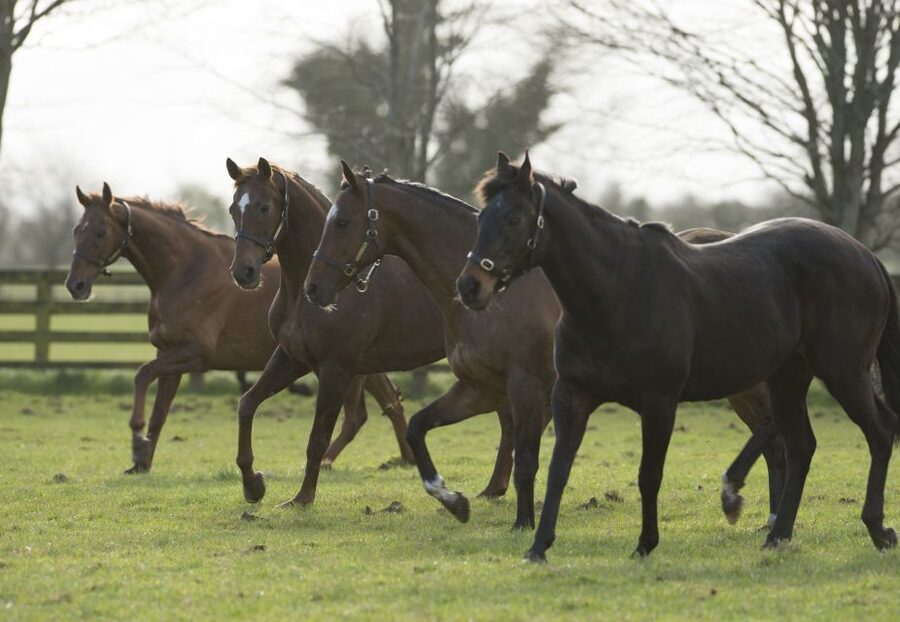
A big reason people love this place is the Living Legends area. This is where retired equine racing stars are highlighted, and you get to see them in a calmer phase of life.
The program includes specific famous names, including Hurricane Fly, Beef, Salmon, and Faugheen. That list is part of what makes the day click if you are even loosely familiar with racing. You are not only learning about horses in theory. You’re connecting the breeding story to the actual performers the farm produced.
The viewing is set up so you can watch retired horses grazing in paddocks from a dedicated Living Legends room area with large windows. The room also explains what life looks like after racing, plus how famous horses and people connect across the wider racing world.
If you are visiting with someone who thinks thoroughbreds are only about speed, this portion helps shift the mindset. The horses look cared for, and the story is about transition, not just triumph.
Japanese Gardens: an oasis of calm with a thoughtful path
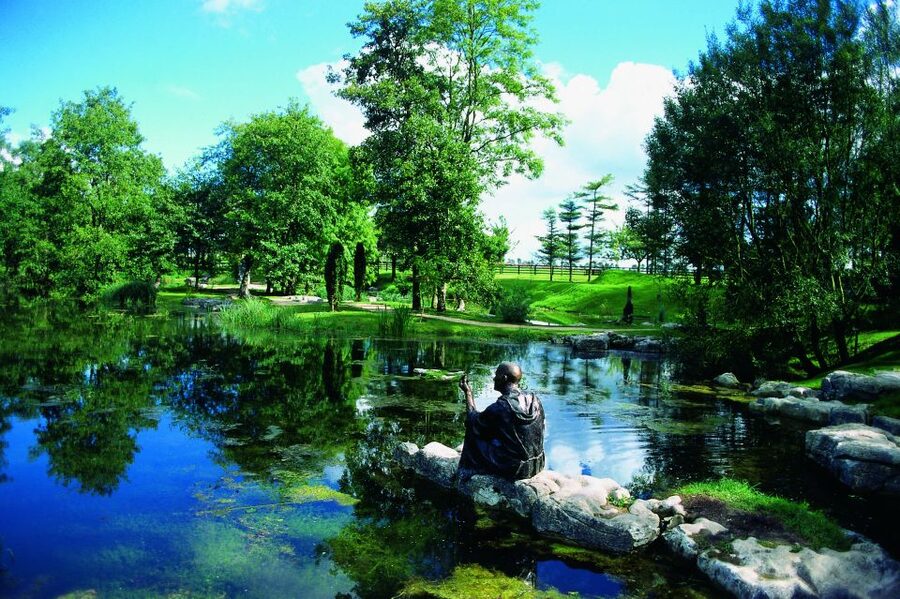
After the stud tour and horse viewing, the Japanese Gardens are where your brain gets a breather. The setting is designed as a calm experience rather than a checklist.
You can wander the gardens and follow the Life of Man path, which traces a soul’s passage from birth to death and beyond. Even if you do not focus on the symbolism, it’s a pleasant way to slow down after the energy of stallions and foals.
This part is also a good time to regroup with your group. People who love gardens often gravitate here immediately. People who are more horse-focused often enjoy the contrast because it gives you room to look closely at details without feeling like you need to keep moving for the next animal.
If you want a simple break, there is also food available on site. One highlight I’ve seen mentioned is having lunch at the restaurant located in the garden area, described as first class. So you can plan a relaxed meal between horse zones and indoor interactive rooms.
St Fiachra’s Garden: Irish style, native species, and wildlife spotting
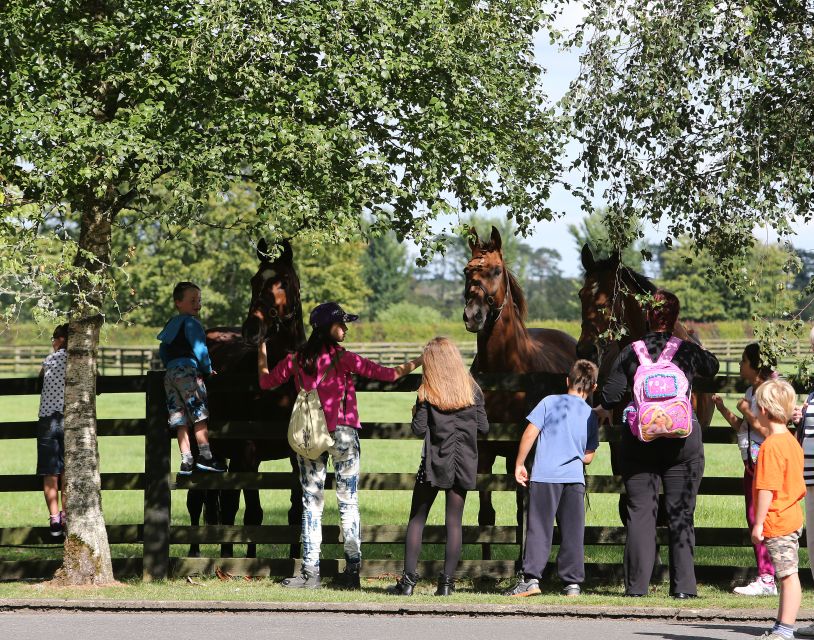
Then you shift gears to St Fiachra’s Garden. This is an inherently Irish garden theme, created to symbolize power of the Irish landscape.
Practically, it’s also a different kind of stroll. Instead of focusing mainly on the ordered calm of Japanese design, this garden encourages you to look outward. You can spot various native species and Irish wildlife as you move through the grounds.
If you love travel days that include small moments, this is the section that often delivers them. You might find yourself pausing to watch birds or scanning for native plants, especially if you like wildlife spotting between your major stops.
Inside the award winning Irish Racehorse Experience
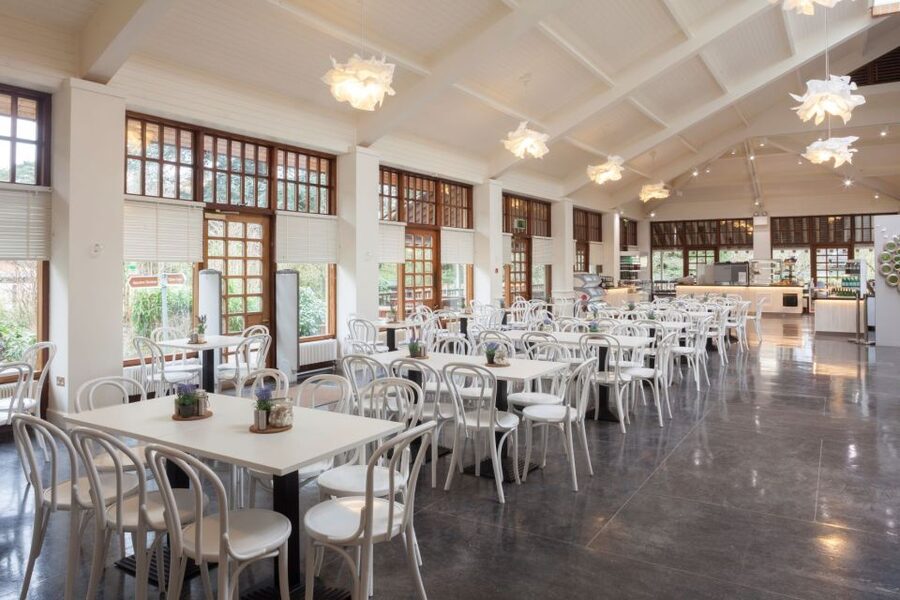
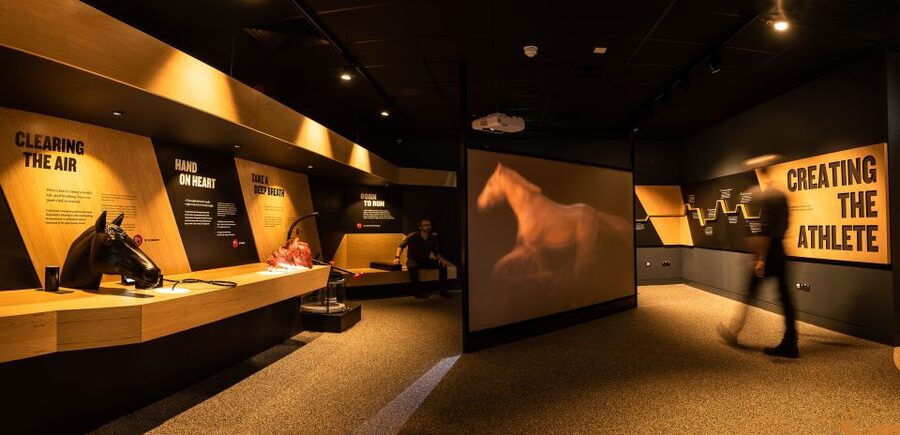
The Irish Racehorse Experience is the indoor, story-driven part of the day. It takes you through a journey from birth to retirement of a racehorse, using interactive rooms that explain key steps in the thoroughbred process.
Your first arrival into the experience starts with a personal touch: you receive a horse box that gives you the feeling of owning a racehorse. From there, the journey goes in stages.
You learn about foaling and the early years, then you move into rooms that cover training, racecourses, jockeys, and even anatomy and physiology. This is especially useful if you’re the kind of visitor who wants to know why the horses are built the way they are, and what training tries to achieve.
Then comes the interactive auction. Through a sequence of beautifully appointed rooms, you can purchase an unbroken yearling. It’s not just a game. It’s designed to put you in the role of making choices and thinking like a buyer, based on what you learn in the earlier rooms.
Race day is the payoff. You get a taste of fashion, betting, and animated commentary style as you witness your chosen racehorse on race day. There’s even a simulated ride so you can see how your investments might work in a race.
If your group is mixed in interest, this is where you’ll often find common ground. Even if someone is not a racing expert, the story format makes the topic accessible. And if you are a racing fan, you’ll likely appreciate the way the experience connects training, racing, and the human side of the sport.
How long to plan for (and what to do first)
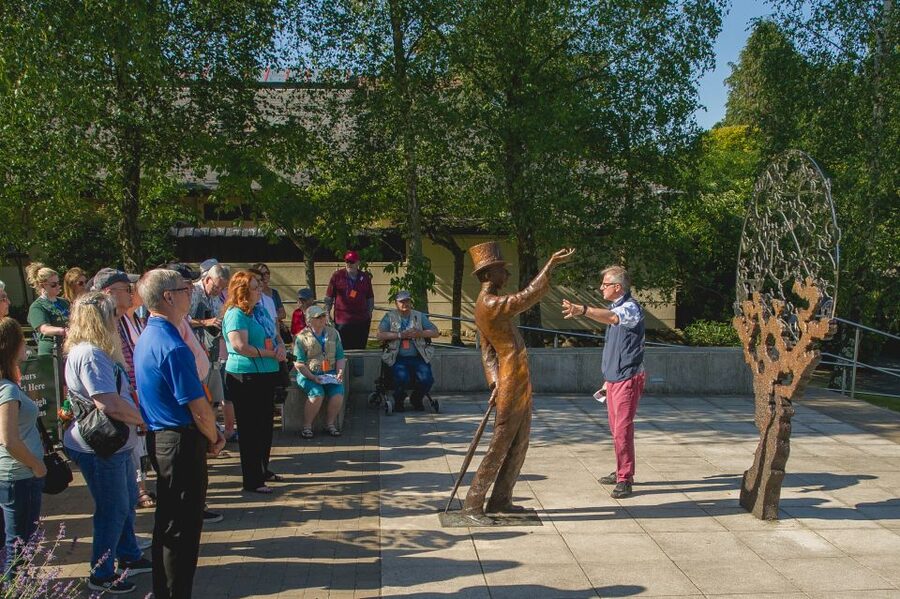
The ticket covers a full day, but your time can disappear quickly if you treat it like a casual wander. The good approach is to pick an order that reduces stress.
A practical pacing idea:
- Start with the racehorse experience if you have a timed tour later. It runs from 11:00 to 4:00, so it gives you a clear window.
- Then do the public tour of stallions, mares, and foals at your assigned time.
- Finish with gardens, letting the Japanese Gardens and St Fiachra’s Garden be your decompress time.
One reason to do this is that you are likely to want time in the gardens without feeling late for the next room. Gardens are best enjoyed slowly, and both Japanese Gardens and St Fiachra’s Garden benefit from unhurried wandering.
Also remember the last entry is at 5:00 PM. If you wait too long, you may miss the last chance to get into parts of the experience.
Weather, seasons, and when the stud is most active
The best time to visit the Irish National Stud and Gardens is from February to September. From October onward, the stud starts to wind down and there is limited stock on the grounds.
That matters because you may come for the horse viewing and the sense of active breeding farm life. When things slow down, you can still visit for gardens and the interactive experience, but the atmosphere might feel different.
If you’re traveling in late fall or winter, the trade-off is that you should plan around reduced tour schedules. Public tour times change in October onwards, and tours become less frequent.
And yes, Ireland weather can be unpredictable. When it rains, the indoor Irish Racehorse Experience gives you a solid fallback, so the day doesn’t collapse into one wet walk after another.
Who will enjoy this most
This is a strong fit for:
- Horse lovers, especially thoroughbred fans who want more than a quick stop
- People who like guided learning, because the public tour with a live guide is a key part of the day
- Travelers who want both nature-style walking and an indoor interactive storyline
- Families traveling with kids age 7 and up, since the Irish Racehorse Experience has a minimum age rule unless an adult accompanies younger children
If you only want a quick photo stop and you hate timed schedules, it might feel like too much planning. But if you enjoy structured sightseeing that still lets you wander, it’s a good match.
Should you book the Irish National Stud and Gardens?
I’d book this when you want an Irish experience that goes beyond scenery and into how thoroughbreds are created, trained, and retired. The combination of stallion, mare, and foal viewing, Living Legends with recognizable retired stars like Hurricane Fly, and an interactive racehorse experience makes the $22 ticket easier to justify.
You should also book if you love gardens and you want two distinct styles in one place, Japanese Gardens plus St Fiachra’s Garden.
Hold off or plan carefully if you are visiting outside the February to September peak window, since tour schedules tighten from October onwards and the stud grounds have limited stock. And if you’re traveling with kids under 7, plan around the fact that the Irish Racehorse Experience is not available for that age group without an adult accompanying them.
If your day is already anchored around Dublin, this is one of the better value side trips in County Kildare because you get horses, storytelling, and gardens in a single, well-paced outing.
FAQ
What is the price for Kildare: Irish National Stud and Gardens?
The price is $22 per person.
How long does the visit take?
The experience is listed as 1 day.
What times do the public tours run?
Public tour times are 10:30, 12:00, 2:00, and 4:00. In summer months, tours run additional times at 1:00 and 3:00. From October onwards, tour times are 11:00 and 2:00.
What are the opening hours for the Irish Racehorse Experience?
The Irish Racehorse Experience opens from 11:00 AM to 4:00 PM.
Is the Irish Racehorse Experience suitable for children?
It is not available for children under age 7 unless accompanied by an adult.
What is the last entry time?
The last entry is at 5:00 PM.
What horse areas and retired horses can you see?
You can view stallions, mares, and foals on the stud farm. The Living Legends area includes retired racing stars such as Hurricane Fly, Beef, Salmon, and Faugheen.
Is a guided tour included with the ticket?
Yes, a free public tour is included, and it runs at scheduled times. The experience also includes a live tour guide.
Freshly listed around Ireland
- Westport: Beach and Countryside Guided Horse Ride★ 4.8 · 6 reviews
- Westport: Fun-filled walking tour of a beautiful town★ 5.0 · 7 reviews
- Wicklow: Private Day Tour from Dublin★ 5.0 · 5 reviews
- Wicklow Mountains Private Day Tour including Glendalough★ 5.0 · 7 reviews
- Waterford Treasures: Walking Tour of the Viking Triangle★ 4.7 · 43 reviews
- Waterford: The Irish Wake Museum Guided Tour★ 4.8 · 6 reviews
- Waterford: Mount Congreve Gardens Entry Ticket★ 5.0 · 7 reviews
- Waterford Crystal & Kilkenny City Small Group Tour★ 4.7 · 6 reviews