
REVIEW · HISTORICAL TOURS
2-Hour Historical Walking Tour from Dublin
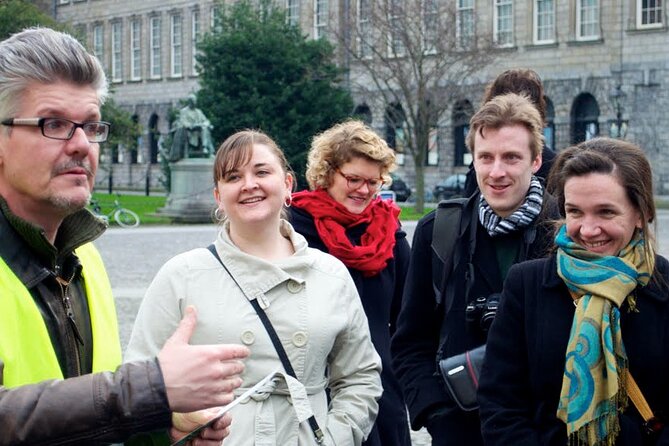
Dublin gets a lot clearer on foot. I love the history postgraduate guides who connect the city’s eras in plain language, and I love the small-group value that keeps the price reasonable while still giving you real time to ask questions. You get a tight intro to Dublin’s power, faith, and conflicts, starting right where most first-timers are already looking around.
The only drawback is that this isn’t a light stroll through pretty streets. It leans in-depth on history and politics, so you’ll want to pay attention and bring calm patience, especially in colder or wetter weather.
In This Review
- Key points before you go
- Price and logistics that make this tour feel like a good deal
- Where the walk starts, and why the Trinity setup matters
- Bank of Ireland, Protestant Ascendancy, and reading buildings like clues
- Temple Bar: why a demolition plan turned into a cultural quarter
- Wood Quay Amphitheatre and the Viking layer you can actually picture
- Four Courts and why June 1922 still matters
- Christ Church Cathedral: medieval rule, rebuilding, and survival
- City Hall and Daniel O’Connell, Catholic Emancipation, and the fight for laws
- Dublin Castle: King John, British administration, and Dubh Linn
- What makes the guide experience stand out (and how to get the most from it)
- Walking pace, weather reality, and comfort tips that actually help
- Who this tour is best for, and who might prefer something else
- Should you book this Dublin historical walking tour?
- FAQ
- How long is the Dublin historical walking tour?
- Where is the meeting point?
- Where does the tour end?
- How much does it cost?
- Is the tour offered in English?
- Is entry to the Book of Kells included?
- What is the maximum group size?
- What sites are included on the route?
- Is the walking tour suitable for everyone physically?
- What is the cancellation policy?
Key points before you go
- A focused 2-hour orientation that leaves you hours of freedom afterward
- A history-postgraduate guide (you might hear names like Eoin, Jodie, or Jody) who can turn dates into stories
- Small group, max 25 so the pace stays manageable and you can actually hear
- Classic Dublin landmarks plus timeline jumps from medieval rule to Viking traces to 20th-century conflict
- Book of Kells is discussed, not included so you can plan your own add-on
Price and logistics that make this tour feel like a good deal
At $22.98 per person for about 2 hours, the math works best if you use the tour for context, not as a replacement for everything else. This is the kind of booking that helps you avoid the early-trip confusion of, Why is that building important, and what happened there?
The group stays small, up to 25 people, and it’s run in English with a mobile ticket. You’ll also get a clear “start here, end there” structure, with the walk beginning near Trinity College and finishing at Christ Church Cathedral. That helps you keep momentum and avoid spending your precious free afternoon circling the center.
One more value point: many stops are handled as outside sights or free access areas, while the big paid add-on is explicitly left out. That means you can control your spending and decide later if the Book of Kells is worth your time and tickets.
More History Tours in Dublin
- Dublin Historical Centre Food Tour with 8 Food Tastings & Drinks
★ 5.0 · 1,718 reviews - Historical 2-Hour Guided Walking Tour of Dublin
★ 4.7 · 865 reviews - Dublin to Cork, Blarney Castle & Cóbh Heritage Centre by train
★ 4.5 · 510 reviews
Where the walk starts, and why the Trinity setup matters
You meet at the Henry Grattan Monument on College Green, opposite Trinity College Dublin’s front gate. It’s a smart starting choice because Trinity is one of the easiest places in Dublin to orient from, even if you’re arriving jet-lagged or wet from a commute.
From there, the tour goes onto the Trinity campus and sets the tone. You’ll hear how Trinity became Ireland’s oldest university, founded in 1592, and why it’s still a key landmark for understanding Ireland’s past. The guide also talks about the Book of Kells, an 8th-century Latin manuscript of the four Gospels, but entry to the exhibit is not included.
What I like about this approach is that it gives you a named anchor early. You’re not walking blind, and you’re not waiting until the middle of the tour to understand what you’re seeing. If your goal is to get your bearings fast, this first stop does that job.
Bank of Ireland, Protestant Ascendancy, and reading buildings like clues
Next is a stop at the Bank of Ireland, a building originally connected to Ireland’s colonial parliament. Built in 1729 and later abolished by the Act of Union in 1800, it also gets framed as a symbol of Protestant Ascendancy, especially in the 18th century. The tour brings in neo-classical architecture as part of the story, not as decoration.
This is one of the places where a good guide makes a real difference. The building is easy to pass without noticing, but once you know what it represented, you start seeing how political power leaves physical fingerprints behind.
If you’re the type who enjoys “why is that there?” questions, you’ll get a lot out of this stop. If you prefer to keep politics in the background, you may want to mentally label it as one of the heavier chapters.
Temple Bar: why a demolition plan turned into a cultural quarter
Then the tour shifts to Temple Bar, a narrow-street area that was once earmarked for demolition. Instead, it was repurposed as Dublin’s Cultural Quarter in the 1990s.
This is a neat pivot because it shows how cities rewrite themselves. You’re not just learning about old regimes, you’re also seeing how Dublin chose what to protect, what to brand, and what to rebuild. It’s the kind of contrast that makes the rest of the walk hit harder, because you realize that history is not only what happened. It’s also what a city decided to preserve.
The stop is short, so if you’re taking photos, do it quickly and keep moving. This isn’t a “linger and browse” segment, it’s a “learn the key idea, then continue” segment.
More Walking Tours in Dublin
- Dublin Highlights and Hidden Gems Guided Walking Tour
★ 5.0 · 6,020 reviews - Dublin: Highlights and Hidden Gems Walking Tour
★ 4.9 · 2,140 reviews - 1916 Rebellion Walking Tour
★ 5.0 · 1,605 reviews - 90 Minute Dublin Walking tour and Sightseeing tips
★ 5.0 · 916 reviews
Wood Quay Amphitheatre and the Viking layer you can actually picture
At Wood Quay Amphitheatre, you’ll connect the Dublin you walk today to the Viking city beneath it. Archaeological excavations in the 1980s uncovered major traces, tied to the Vikings who founded the city around AD 840.
What makes this stop work is the visual payoff. The city feels older when someone helps you imagine what would have been here centuries ago. Even if you don’t see artifacts up close, the explanation gives you a mental map of how Dublin grew from a settlement into something larger.
The main practical tip here is simple: keep your attention on what your guide points out. This is one of those “short stop, big meaning” moments, and it’s easy to miss the point if you’re distracted by streetscape photography.
Four Courts and why June 1922 still matters
Four Courts is one of the most emotionally charged stops on the route. It’s Ireland’s legal headquarters, and it’s also where a Civil War started in June 1922, between groups supporting and opposing the Treaty of December 1921, which ended the War of Independence from 1919 to 1921.
This is where the tour’s political depth shows. The site itself is prominent, but the guide connects it to the idea that legal and governmental spaces are not neutral backdrops. They become centers of power during real decisions and real violence.
If you’re sensitive to heavy topics, plan for this to be the stop where you take the longest breath and let the timeline settle. If you’re a history fan, this is likely one of your favorites because you get the “how did it get that way?” chain made explicit.
Christ Church Cathedral: medieval rule, rebuilding, and survival
At Christ Church Cathedral, you’ll hear the date range that explains why it’s such a layered stop. It’s Dublin’s oldest cathedral, dating to around 1030, and it was rebuilt in stone in the 1170s by Strongbow, a figure tied to the original English invasion of the 1170s.
This part of the walk helps you understand that some of Dublin’s most famous religious spaces are also records of political shifts. Even if you’re not religious, you can still appreciate how the architecture and timeline point back to who held influence at different moments.
The stop is brief, so focus on what the guide highlights. If you want a deeper look, you can always extend it on your own at the end of the tour since the walk finishes near here.
City Hall and Daniel O’Connell, Catholic Emancipation, and the fight for laws
The tour then moves to City Hall and points out the statue of Daniel O’Connell, Dublin’s first Catholic Lord Mayor (1840). He led a successful campaign for Catholic Emancipation in 1829, helping end anti-Catholic laws, which is why he’s often called The Liberator.
This stop works well because it turns a famous name into a specific cause-and-effect story. You’re not just memorizing a figure. You’re learning what he pushed for and why it mattered in day-to-day life.
It’s also a good moment to check your own interest. If you find yourself connecting to the legal and social angles, you’ll likely enjoy the Dublin Castle stop that comes next, because it continues the theme of rule, administration, and identity.
Dublin Castle: King John, British administration, and Dubh Linn
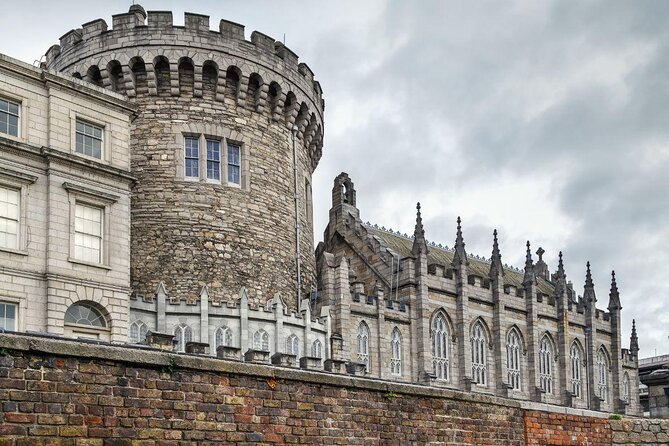
Dublin Castle is next, and it’s one of those places that feels important even before you understand why. The tour explains it was built by Bad King John in 1204 and served as the seat of British administration until 1922. You’ll also hear about Dubh Linn, the Black Pool, which is connected to how Dublin got its name.
This is another place where the guide’s storytelling style matters. If your guide can link the timeline to the geography, Dublin Castle starts to make sense as more than a landmark. It becomes the center of administration and identity shifts.
I like that the stop includes naming and origins, because it helps you remember information later. You’ll likely find yourself using Dubh Linn or the administration timeframe to connect other places you visit on your own.
What makes the guide experience stand out (and how to get the most from it)
The guides are all history postgraduates, and that shows in how they pace the story. You’ll typically get an overview of Dublin’s arc, then each stop adds one more layer. The guide also balances humor and clarity, and the best runs keep the information from turning into a lecture you can’t hold onto.
In the reviews, names like Caolan Maher, Daragh, John D., Eoin, Jodie, Jody, and Colm come up as examples of entertaining and well-structured presentation. I can’t guarantee you’ll get any specific guide, but the pattern is clear: you should expect a strong narrative style and a voice that helps you follow along on a walking tour.
Here’s how to get the best outcome for you:
- Wear shoes you can walk in for about 2 hours plus, since it may run a bit longer than the ideal timing.
- Keep your phone away during the heaviest political explanations, so you don’t miss the key connections.
- Ask one question if something feels confusing. The guide will usually clarify without derailing the group.
Also, go in knowing what this tour is. It’s a history walking tour, so it will focus on politics, institutions, and conflicts. If you want a more culture-and-shopping vibe, you might prefer a different type of guided walk afterward.
Walking pace, weather reality, and comfort tips that actually help
The tour is designed for moderate physical fitness. It’s not presented as a strenuous hike, but you are moving and stopping across important central-city locations. If you’re sensitive to cold wind or rain, dress for it, because some sessions happen in crisp winter weather and windy mornings.
I’d plan on this as an orientation day piece, not an add-on you stack with another long activity right afterward. You’ll be mentally busy, especially if you like timelines and cause-and-effect stories.
If you’re traveling with kids, the data suggests this may not suit younger children due to the political and historical density. For teenagers and adults, it tends to land well as long as you’re willing to pay attention.
Who this tour is best for, and who might prefer something else
This fits best if you:
- Want to understand Dublin’s timeline early in your trip
- Enjoy history that connects buildings to real events
- Like guided storytelling instead of reading plaques alone
- Appreciate a clear “where am I and why does it matter” start
You might want to skip or pair it with a different tour if you:
- Prefer lighter, purely cultural walking experiences
- Want fewer politics and names in a single sitting
- Get impatient when a guide spends extra time on context
The upside is that the tour format still respects your day. After about two hours, you should have the rest of the day free to explore at your own pace with better context.
Should you book this Dublin historical walking tour?
If you want a fast, high-value way to understand what you’re looking at in Dublin, I think this is a smart booking. The price is reasonable for a guided, small-group walk, and the route covers major sites that explain Dublin’s power shifts, faith changes, and political turning points.
Book it especially early in your trip. It’s the kind of tour that makes the rest of your self-guided wandering easier because you’ll recognize the story behind the stone.
If your idea of a Dublin walk is mostly vibes, shops, and casual sightseeing, then you might feel like the history is too heavy. But if you’re happy to trade a little speed for clarity, this is one of the better ways to turn Dublin from a bunch of landmarks into a real narrative you can follow.
FAQ
How long is the Dublin historical walking tour?
It lasts about 2 hours.
Where is the meeting point?
You start at Henry Grattan Monument, College Green, Dublin, Ireland, opposite the front gate of Trinity College Dublin.
Where does the tour end?
The tour ends at Christ Church Cathedral, Christchurch Pl, Wood Quay, Dublin, D08 TF98.
How much does it cost?
The price is $22.98 per person.
Is the tour offered in English?
Yes, the tour is offered in English.
Is entry to the Book of Kells included?
No. The Book of Kells is discussed, but entry is not included.
What is the maximum group size?
The tour has a maximum of 25 travelers.
What sites are included on the route?
You’ll visit or pass: Trinity College Dublin, the Bank of Ireland, Temple Bar, Wood Quay Amphitheatre, Four Courts, Christ Church Cathedral, City Hall, and Dublin Castle.
Is the walking tour suitable for everyone physically?
It’s listed for travelers with a moderate physical fitness level.
What is the cancellation policy?
Free cancellation is available. You can cancel up to 24 hours in advance for a full refund. If you cancel less than 24 hours before the start time, the amount paid is not refunded.
More day tours out of Dublin
- From Dublin: Cliffs of Moher, Burren & Galway City Day Tour
★ 4.8 · 18,888 reviews - Kilkenny, Wicklow Mountains & Glendalough Day Tour from Dublin
★ 5.0 · 7,897 reviews - From Dublin: Wicklow Mountains, Glendalough & Kilkenny Tour
★ 4.8 · 6,235 reviews - Cliffs of Moher, Burren and Galway Day Tour from Dublin
★ 4.5 · 2,755 reviews
Freshly listed around Dublin
- Wicklow Mountains Private Day Tour including Glendalough★ 5.0 · 7 reviews
- Wicklow: Private Day Tour from Dublin★ 5.0 · 5 reviews
- Women Of Ireland: Trailblazers & Pioneers★ 5.0 · 4 reviews
- Full Day Private Wicklow Tour★ 5.0 · 12 reviews
- Wicklow tour of Glendalough★ 4.5 · 8 reviews
- Wicklow Mountains & Glendalough Luxury Private Day Tour★ 5.0 · 23 reviews
- Premium Irish Whiskey Tasting Hosted by Local Dublin Expert★ 5.0 · 77 reviews
- Whiskey Tasting Tour of Dublin★ 5.0 · 117 reviews
Historical Tours, compared.

Dublin Historical Centre Food Tour with 8 Food Tastings & Drinks
Read our review →
Historical 2-Hour Guided Walking Tour of Dublin
Read our review →
Dublin to Cork, Blarney Castle & Cóbh Heritage Centre by train
Read our review →
Jeanie Johnston Tall Ship Irish Famine History Tour
Read our review →

Deliciously Dublin: The Artisan Donut Walking & History Tour
Read our review →
Browse the lists this tour appears in