
REVIEW · HISTORICAL TOURS
Galway History Walking tour with Local expert – Private Group
Galway feels smaller and sharper when someone shows you. This private, local-led walk strings together landmark squares and side streets, with stories that connect people, places, and power in everyday Galway. I also like that St Nicholas Collegiate Church is a real anchor stop, not just a quick photo.
Two big pluses make this worth your time. First, the guide sets you up with context you can actually use while you explore on your own after the walk. Second, the route balances famous spots with the kind of lesser-visited details that help you understand how the city works. The one consideration is weather, since it is a walking tour and it needs good conditions to run well.
In This Review
- Key Highlights You’ll Care About
- Where You Start and How the Walk Feels (Hardiman Hotel to “Your Pace”)
- Eyre Square: Tribes, Browne Doorway, and the John F Kennedy Memorial
- Williamsgate Street to Church Lane: Shops, Oscar Wilde, and a Burial Ground
- Courthouse Square and the River Corrib Pause: Galway Cathedral in View
- Lynch’s Castle, Dead Man’s Lane, and the Lynch Memorial Legend
- Bowling Green to Bloomsday: Nora Barnacle’s Connection
- St Nicholas’ Collegiate Church: What’s Included and Why It’s the Anchor Stop
- The Latin Quarter and High Street: King’s Head Pub, Naughton House, and Names That Stick
- Spanish Parade and the Spanish Arch: Galway as a Port City
- Hall of the Red Earl, Druid Theatre, and An Taibhdhearc: Culture Changes the Story
- Abbeygate Street Lower: From Former Cathedral to Augustinian Afterlives
- Price and Value: Is $150.60 per Group a Smart Deal?
- Who This Tour Fits Best (and Who Might Prefer Something Else)
- Should You Book This Galway History Walking Tour?
- FAQ
- Where is the meeting point for the tour?
- How long is the Galway history walking tour?
- Is the tour private?
- What language is the tour offered in?
- Is St Nicholas Collegiate Church included?
- What if the weather is bad?
Key Highlights You’ll Care About
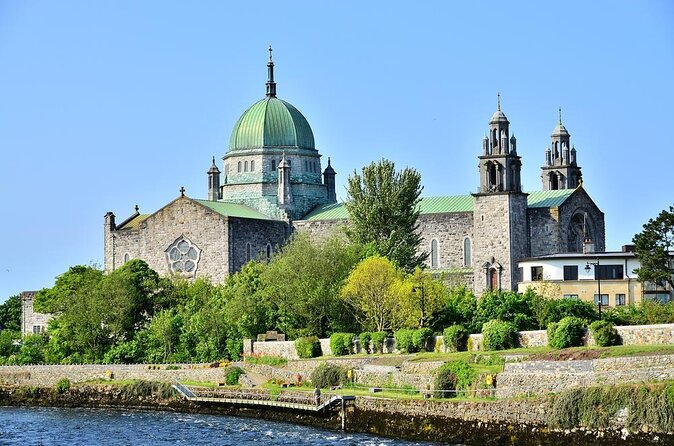
- Hardiman Hotel meeting point in Eyre Square, right where you can orient fast before you start walking
- Eyre Square landmarks like the Browne Doorway and the Tribes of Galway banners, plus the JFK memorial stop
- Lynch’s Castle on the River Walk, described as the finest surviving town-castle in Ireland, with clan crests and roundels
- St Nicholas Collegiate Church visit, with an included voucher for certain time slots and discounted entry for guided tours
- Latin Quarter and port history, including the Spanish Parade area and the nearby Spanish Arch
Where You Start and How the Walk Feels (Hardiman Hotel to “Your Pace”)
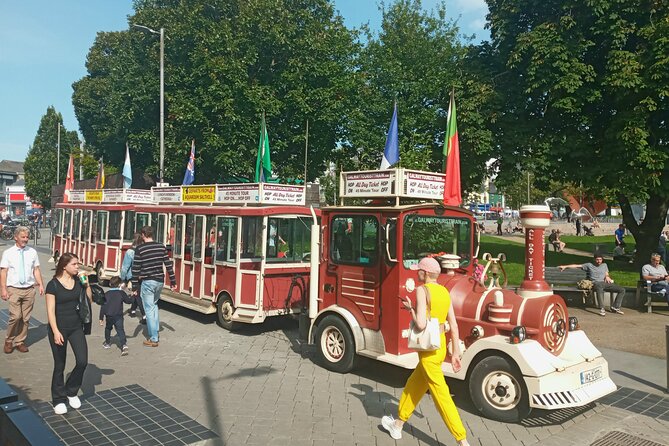
Your day begins at Eyre Square, at the front entrance of the Hardiman Hotel. It is a clean, easy meeting point because you are already in the middle of town, with plenty of foot traffic and nearby transit. You get a mobile ticket, and the tour runs in English.
The total time is about 1 hour 55 minutes, and it is built for small groups, with the option to have it as a private experience for just your party. The price is listed per group up to 13, so the feel of the tour depends on how many people are in your booking. In practice, it tends to be relaxed, with the guide encouraging questions and letting you set your pace within reason.
One smart thing to plan for is that this is not a “sit on a bus” sightseeing plan. You will be walking through real streets, crossing between key areas of the city center, and pausing for short story moments. On a breezy or wet day, you may have to work a little harder to hear every detail, so bring a hat, a light layer, and patience.
More History Tours in Galway
- Galway: Dark History Guided City Walking Tour
★ 4.8 · 236 reviews - The Dark History Tour of Galway City
★ 5.0 · 146 reviews - Galway City on Foot with Seán: Stories, History, Local Tips, Chat and More..
★ 5.0 · 64 reviews
Eyre Square: Tribes, Browne Doorway, and the John F Kennedy Memorial
Eyre Square is where Galway’s story starts sounding personal. The guide begins with a quick orientation, then points out key landmarks around the square so you understand what you are looking at before you move on.
You get to hear about the Browne Doorway and the Tribes of Galway banners, two threads that help explain why this city historically mattered. The guide also includes the John F Kennedy memorial, which is a useful reminder that Irish local history often connects to big international names in surprising ways.
Then come a few other small anchor points that make it easier to navigate later on. You will see the Quin-centenary Fountain and the O’Connaire Statue, and the guide ties these into how the city celebrates identity and anniversaries. The square is also where you can get your bearings, so if you are the type who wants to plan the rest of your day right after a tour, this opening is a strong start.
Williamsgate Street to Church Lane: Shops, Oscar Wilde, and a Burial Ground
From Eyre Square you shift into the tighter grid of central streets, and the tone changes from “big landmarks” to “daily life with a backstory.” Along the way, you pass notable storefront architecture like the Browne Thomas building, and you will spot jewelry shops known for Claddagh rings. If you are shopping anyway, this is the part of the walk that feels most practical.
There is also an Oscar Wilde statue stop if time allows. Even when you do not stop long, the guide’s commentary helps you notice why Galway puts certain literary names on pedestals.
Then you turn toward Eglinton Street and you pass the Franciscan Friary church. Behind it, there is a small graveyard that was described as an important burial place in the mid-17th and early 18th centuries. This is one of those “quiet” stops that pays off because it adds a human scale to the city’s past, not just architecture and dates.
If you like history that lives in ordinary corners, this segment is a good match. The only catch is timing, since every pause depends on foot traffic and weather.
Courthouse Square and the River Corrib Pause: Galway Cathedral in View
As the walk moves toward Courthouse Square, you learn that the area used to hold two iconic courthouses, one for county and one for city, with one still remaining today. The guide also points out the Town Hall Theatre across the square, which helps the space make sense beyond its own walls.
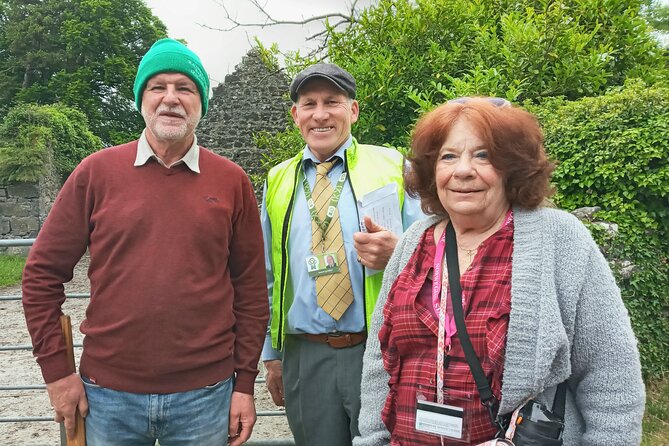
Next, you pause near a pedestrian bridge over the River Corrib. This is the spot where you get a look at Galway Cathedral and the Franciscan Chapel. The description calls it Europe’s newest stone cathedral, and seeing it from this vantage point gives you a clear sense of how modern religious architecture sits next to older Irish city layers.
Why this stop matters: it breaks the pattern of “medieval and memorials only.” It gives you a view of how Galway keeps building, and how faith and civic life keep evolving in the same small area of town.
More Walking Tours in Galway
- The Welcome to Galway Walking Tour
★ 5.0 · 427 reviews - Galway: Welcome to Galway Walking Tour
★ 4.8 · 338 reviews - Walking and Tasting Tour of Galway City
★ 5.0 · 283 reviews - The Legendary Walking Tour of Galway
★ 5.0 · 230 reviews
Lynch’s Castle, Dead Man’s Lane, and the Lynch Memorial Legend
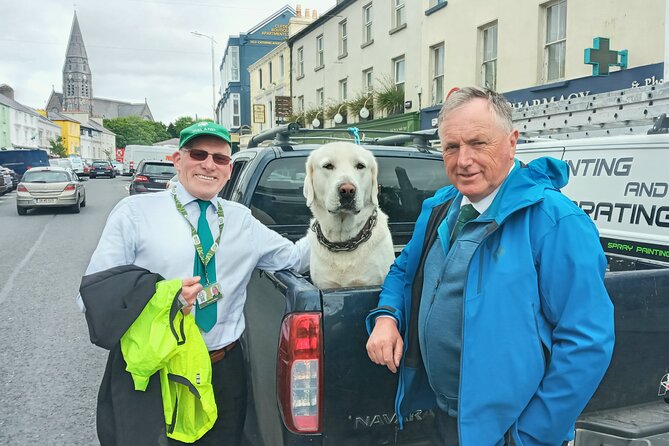
This is one of the walking highlights because the guide turns a dramatic looking building into something you can picture in your mind. You arrive via the popular River Walk and come to the two-street intersection where Lynch’s Castle sits.
The tour describes Lynch’s Castle as the finest surviving town-castle in Ireland. You are not just told a title and moved on. The guide explains the Lynch clan’s ownership, and you get a closer look at how the building’s crests and roundels were used to signal power and identity.
From there, you head toward Market Street, turning right into Church Lane, once called Dead Man’s Lane. That name alone is a clue to the street’s old role. The guide connects the lane to funeral routes heading toward an old graveyard, and you also hear about St Nicholas church-yard along the way.
Then comes the Lynch Memorial window, erected in 1854. The legend shared here is intense, and it stays with you: the mayor of Galway, Mayor Lynch, is said to have hanged his own son at this location. Even if you treat legends carefully, it is a vivid way to understand how civic stories can harden into local lore.
This stretch is the city feeling dramatic. It is also where you will want comfortable shoes, because the pace can feel a bit more “walking to the next story” than lingering.
Bowling Green to Bloomsday: Nora Barnacle’s Connection
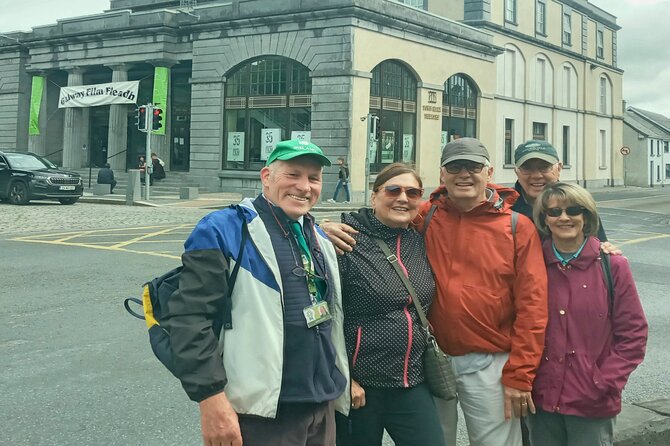
One of the easiest ways to enjoy Galway more is to see how it links to writing and everyday characters. After the Lynch area, the walk passes close to Bowling Green, the family home area of Nora Barnacle.
Here the tour ties Galway to James Joyce and the date now known as Bloomsday, June 16, 1904. Even if you do not go deep into Joyce on your trip, this moment gives you a fresh lens. You start seeing Galway not only as a medieval city, but as a place that produced artists and life-changing relationships.
This stop is short, so think of it as a “spark.” It gives you something to look up later, or something to notice the next time you see Joyce references in shops and street art.
St Nicholas’ Collegiate Church: What’s Included and Why It’s the Anchor Stop
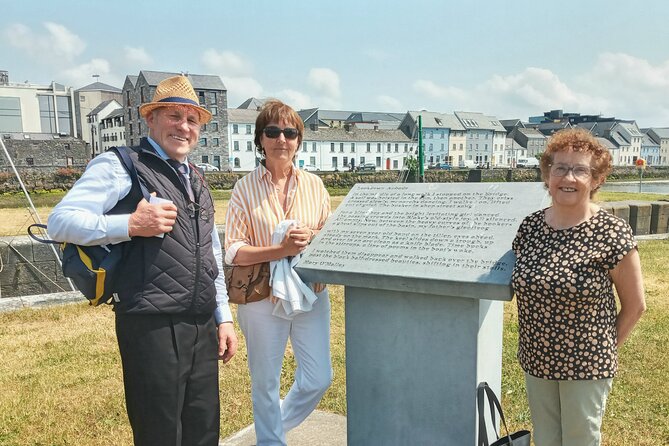
St Nicholas’ Collegiate Church is where the walk becomes more than a street lecture. The guide brings your group to the church and explains why it is the largest medieval church in continuous use in Ireland. The tour also notes a major shift over time: it was originally built as a Catholic church, and today it functions as a Protestant church.
The tour adds an old-world legend too, that Christopher Columbus is said to have worshipped here in 1477 before his voyage. That detail matters because it helps you see the church as part of a larger European story, not just local Galway life.
Now, about your entry and timing. The experience includes a voucher toward visiting St Nicholas for certain time slots, and the church itself runs guided tours on specific days: Mon-Fri at 11am and 2pm, and Wednesdays at 12pm and 3pm. Your tour includes discounted tickets to join those guided tours.
So here is the practical takeaway: if you want the most value, align your own schedule with those guided tour times. Even a short visit here tends to feel different from the rest of the walking portion because you are stepping into a preserved space that is still used.
The Latin Quarter and High Street: King’s Head Pub, Naughton House, and Names That Stick
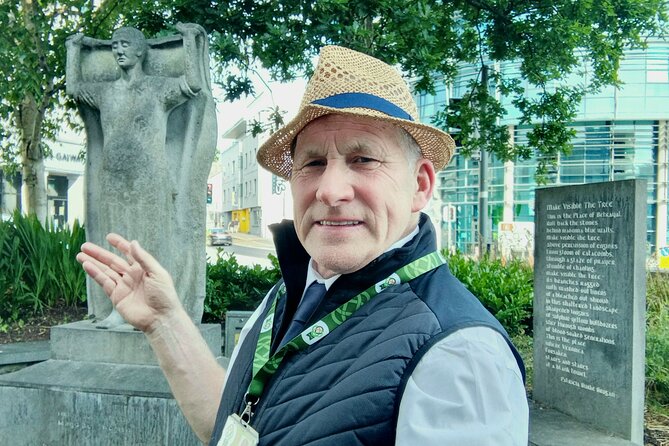
The walk then heads into Galway’s Latin Quarter, with High Street as a key stretch. You will see the King’s Head Pub, where the legend says the site was gifted by Oliver Cromwell as payment to the executioner of King Charles I.
Next, the guide points out Naughton House, once owned by Humanity Dick Martyn, an Irish MP connected to the British Parliament. That nickname alone gives you a clue that local history here is messy, political, and personal.
What I like about this segment is that it turns pub signs and old house fronts into interpretive clues. It helps you stop treating Galway as “pretty streets” and start treating it as a place where power, religion, trade, and punishment all left marks.
Spanish Parade and the Spanish Arch: Galway as a Port City
Next comes the Spanish Parade area, described as the space that formally contained the old Galway port until 1840. This is one of those “you walk by it and miss the point” areas unless someone explains what used to happen there.
Old galley ships from Spain arrived with wines and spices for local merchant families. The guide also explains the significance of the nearby Spanish Arch, so you understand why this area is tied to trade rather than only to scenery.
If you want to feel connected to why Galway became a crossroads, this is where it clicks. You see that the city’s identity was built through movement and commerce long before modern tourism ever existed.
Hall of the Red Earl, Druid Theatre, and An Taibhdhearc: Culture Changes the Story
As the walk loops back toward the medieval core, you get a different kind of history, more Norman and cultural than strictly civic architecture. The Hall of the Red Earl is once a castle residence for Richard de Burgo, a powerful Norman figure. The tour notes that the ruins were lost for centuries and discovered in the late 1990s.
Then you move toward the cultural institutions. The Druid Theatre Company is described as founded by university graduates in 1975, with continued connections to writers like Tom Murphy and Martin McDonough. If you are visiting Galway for arts and theatre, this stop gives you a timeline for why Galway feels creative even when the streets look old.
Finally you pass An Taibhdhearc, noted as Ireland’s only Irish-language theatre. It is tied to Ireland’s early 1920s Free State era as a large-scale cultural project. The tour adds a name: Micheal MacLiamor as the first director or manager, working there from 1928.
These stops are short, but they help you understand Galway’s identity as something still in motion.
Abbeygate Street Lower: From Former Cathedral to Augustinian Afterlives
Your final stretch is on Abbeygate Street Lower at a former cathedral building at the Middle Street and Abbeygate Street area. The tour frames it as a building used for many centuries, then deemed inadequate in 1957 by Galway bishop Dr Michael Browne.
Before you finish, you also get a quick historical thread about the Augustinian Order, which arrived in Galway around 1500 and set up an abbey in the Forthil. The tour notes that Oliver Cromwell’s English army banished them for a period, and they returned in 1760 to establish the building.
This last segment helps tie the whole route together. You start to see Galway history not as a straight line, but as repeated cycles of religious institutions, political forces, and rebuilds.
Price and Value: Is $150.60 per Group a Smart Deal?
At $150.60 per group up to 13, you are paying for a private, guided experience rather than an unlimited crowd event. If you fill the maximum size, the math works out to under $12 per person for nearly two hours of guided walking. Even if your group is smaller, the value comes from what you get: local interpretation, a structured route that prevents you from wandering aimlessly, and a church stop that you can build into your day.
For me, the best value angle is simple. This tour is designed to help you get your bearings fast and to give you enough context that you can enjoy the rest of your Galway without constantly reading your phone. If you plan to explore independently right after, that “heads start” is where the money tends to make sense.
Also, you get small private groups and a professional guide, which usually means fewer distractions and better pace control. It is not a tour that tries to cram in every single street. It picks meaningful stops and explains them.
Who This Tour Fits Best (and Who Might Prefer Something Else)
This is a great fit if you:
- love walking and want to connect buildings to people and events
- want a city overview that helps you navigate later
- enjoy architecture, religion, and local legends in a straight, practical format
- are visiting as a family or mixed-age group and like the idea of tailoring the route to interest
It may be less ideal if you want a fast highlight loop, lots of long breaks, or a heavy focus on modern nightlife. This walk is about history, identity, and place making, and it works best when you are ready to listen for a bit at each stop.
One helpful note for planning: the provider indicates a shortened version can be offered for guests with mobility issues, with plans in place for emergencies. So if walking the full distance is hard, ask for the adjusted route.
Should You Book This Galway History Walking Tour?
I think you should book it if you want a smart introduction to Galway that feels like it was designed for people who actually stay in the city after the tour. The combination of local storytelling, a guided visit to St Nicholas Collegiate Church, and stops like Lynch’s Castle and the Spanish Parade makes the walk more than a “see and go” route.
Skip it only if weather is very questionable, or if you need a very quiet, long-rest, sit-down style tour. Otherwise, this is the kind of small private experience that helps Galway stop being a blur and start being a place with meaning.
FAQ
Where is the meeting point for the tour?
You meet at the front entrance of the Hardiman Hotel in Eyre Square, Galway.
How long is the Galway history walking tour?
The tour lasts about 1 hour 55 minutes.
Is the tour private?
Yes. It is a private tour/activity, and only your group participates.
What language is the tour offered in?
The tour is offered in English.
Is St Nicholas Collegiate Church included?
A voucher toward a visit to St Nicholas Church is included for 10am and 1pm tours only. The church is also part of the route, and the tour offers discounted tickets for guided tours that run Mon-Fri (and specific Wednesday times).
What if the weather is bad?
The experience requires good weather. If it is cancelled due to poor weather, you will be offered a different date or a full refund.
Freshly listed around Galway
- Private visit in an Irish Castle Home★ 5.0 · 6 reviews
- Walking Tour of The Quiet Man Film Locations in Cong★ 5.0 · 78 reviews
- Tribe Gin School Experience in Galway★ 5.0 · 34 reviews
- Cong The Quiet Man Museum Skip-the-Line Ticket★ 4.5 · 13 reviews
- Full Day Private Tour to Ireland★ 5.0 · 32 reviews
- Cliffs of Moher & Sheepdog Demonstrations from Galway★ 4.0 · 4 reviews
- Galway’s Historical Gems: A Walk Through Time★ 5.0 · 3 reviews
- The Irish Dance Experience in Galway, Ireland★ 5.0 · 66 reviews
Historical Tours, compared.

Dublin Historical Centre Food Tour with 8 Food Tastings & Drinks
Read our review →
Historical 2-Hour Guided Walking Tour of Dublin
Read our review →
Dublin to Cork, Blarney Castle & Cóbh Heritage Centre by train
Read our review →
Jeanie Johnston Tall Ship Irish Famine History Tour
Read our review →

Deliciously Dublin: The Artisan Donut Walking & History Tour
Read our review →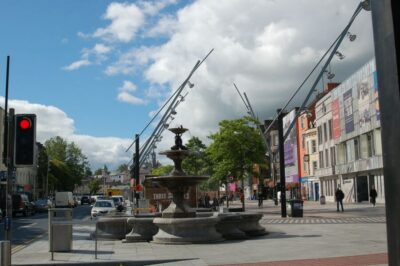
Browse the lists this tour appears in