
REVIEW · HISTORICAL TOURS
Private Ennis Essential History Tour with Dr Jane O’Brien
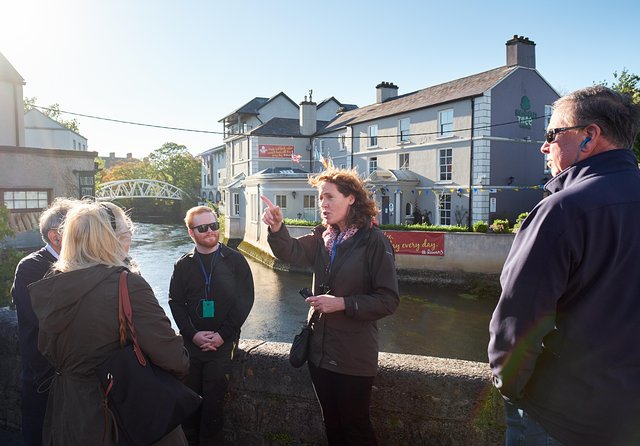
Ennis hits you with centuries in an hour. With Dr Jane O’Brien at the helm, Ennis feels personal fast, thanks to sources and stories that connect daily life to major events. I love the private pacing (small group, time to ask things), and I love that you can see the best of town without rushing your legs. One drawback to know up front, the stops are short, so if you want long sittings and museum-style time, this is more of a focused walking overview than a slow deep read.
This is the kind of tour where the route itself helps you understand the town. You’ll get an optional amplification device if you want it, and you start and end near the centre so the day still feels flexible. You also use a mobile ticket, which is one less thing to juggle in a place where street corners do most of the work.
With a price of $270.32 per group for up to 6 people and an approximate length of 1 hour 10 minutes, it can be good value if you’re a small group. If you’re traveling solo, you’ll still get the same expert attention, but the per-person value depends on whether you have someone to share the booking.
In This Review
- Key things I’d mark on your map
- A one-hour walking timeline through Ennis
- Private guidance by Dr Jane O’Brien, plus listening that’s actually comfortable
- Clare Museum: where Ennis starts as a 13th-century market town
- Ennis’ centre story: Daniel O’Connell, Abbey Street, and the Cathedral finish line
- Ennis Friary and the River Fergus: religion, uprising memory, and a pretty view
- Francis Street and the Friary stained glass: a quiet pause with visual payoffs
- Arthur’s Row: remembering the children from an orphanage and industrial school
- Parnell Street’s McParland House: the only timber-framed survivor you can still see
- Chapel Lane and the Great Famine’s pressure points
- Market Place: where trade was also social life, matchmaking, and faction fights
- Barrack Street: Gallows Green and the crimes written down in 1660
- From the Old Ground Hotel area to O’Connell Street options
- Price and value: $270.32 per group for up to 6 in about 70 minutes
- What to know before you go, so the walk feels easy
- Should you book Dr Jane O’Brien’s Ennis Essential History Tour?
- FAQ
- Is this a private tour?
- How long is the Ennis Essential History Tour?
- How many people can be in a group?
- What language is the tour offered in?
- Is there an admission fee for the stops?
- Can the guide use an amplification device?
- What is the meeting point and where does the tour end?
- Are there any cancellation terms?
Key things I’d mark on your map
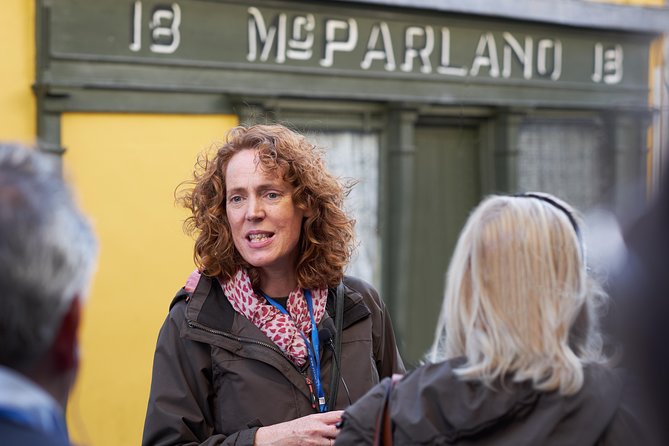
- Meet Dr Jane O’Brien for source-based storytelling that ties Ennis streets to real people and real moments
- Small-group comfort (up to 6) with time for questions, not a cattle-truck sprint
- Optional amplification device to make listening easy, even when you’re moving through open lanes
- A walk designed for your step count, covering a lot of Ennis without a bus ride
- No separate admission tickets needed at stops listed as free, so you’re paying for the guide, not entrances
- Finish near the Cathedral of Saints Peter and Paul, so you can keep exploring on your own
A one-hour walking timeline through Ennis
This is a private, walking-focused history tour that moves at human speed. You start at the Ennis Tourist Information Centre on Arthur’s Row, head into the medieval market town core, and then work your way back toward the Cathedral of Saints Peter and Paul. The whole thing runs about 1 hour 10 minutes, with around 5 minutes at each main stop.
That structure is why it works. Ennis can feel like “just a nice Irish town” until someone shows you how the streets are layered with meaning. This tour does that job quickly, and it gives you a map in your head by the time you’re done.
More History Tours in County Clare:
- Self Guided Electric Bike Tour of Historical Sites in the Burren Co Clare
★ 5.0 · 18 reviews - Private Ennis Dark History Tour with Dr Jane O’Brien (1-6 people)
★ 5.0 · 13 reviews - Dublin Historical Centre Food Tour with 8 Food Tastings & Drinks
★ 5.0 · 1,718 reviews
Private guidance by Dr Jane O’Brien, plus listening that’s actually comfortable
Dr Jane O’Brien’s style is built around making history feel concrete. Instead of broad lectures, you’ll hear how the town’s layout connects to medieval markets, religious life, and political turning points. The tour also leans into day-to-day scenes, so you’re not only learning what happened, you’re learning how people lived around it.
A practical plus: there’s an option for an amplification device. If you’re in a group where one person always struggles to hear on outdoor walks, this removes that stress. I also like that the tour is in English, and it’s designed for most travelers.
If you’re the kind of person who likes asking follow-up questions, this format is a win. With only your group taking part, the guide can keep the pace to match you rather than pacing for a big crowd.
Clare Museum: where Ennis starts as a 13th-century market town
The tour begins beside the Clare Museum, at the former Convent building for the Sisters of Mercy. That matters because it frames Ennis as a town that grew through institutions, not just through “famous names.”
Here, you’ll get the origin story: Ennis emerged as a medieval market town starting in the 13th century. Market towns were not quiet places. They were trading hubs where people came in for livestock, produce, news, and social life. Even if you just wandered through Ennis on your own, this stop helps you see why the town centre grew the way it did.
Practical tip: this is a good start if you want orientation. You’ll leave with a clearer mental map before you hit the narrower lanes.
Ennis’ centre story: Daniel O’Connell, Abbey Street, and the Cathedral finish line
From there, you move into the heart of town.
Next up is the Daniel O’Connell Monument in Ennis town centre, a site tied to events around Catholic Emancipation. O’Connell is one of the major figures in Ireland’s political story, and placing him in Ennis helps you understand how big national change showed up at street level, not only in books.
Then comes Abbey Street, where you’ll step into one of Ennis’s atmospheric bow-ways, those small laneways that connect main streets to areas that were once poorer tenements. This is an easy stop to overlook if you’re just photo-hunting, but it’s one of the most important “how people lived” moments on the walk. You’ll likely come away thinking about how housing, crowding, and economics shaped daily life, street by street.
As the tour comes to a close, the last stop is the Cathedral of Saints Peter and Paul. It’s the main Catholic church of the region, built between 1830 and 1870. The guide also points out that it sits opposite the Old Ground Hotel, which was once the town jail site, and the cathedral also incorporates a haunted towerhouse dating to the 1500s. If you like your history with a little atmosphere, this is where the tone shifts into something memorable and dramatic, without turning into fantasy.
A few more County Clare days worth comparing
- Shannon Airport to Galway City, Private Chauffeur Service
★ 5.0 · 21 reviews - Shannon Airport to Cork, Private Chauffeur Service
★ 5.0 · 9 reviews - Private Cliffs of Moher Tour Small Group from Ennis, Ireland
★ 5.0 · 6 reviews - Shannon Airport to Killarney , Private Chauffeur Service
★ 5.0 · 5 reviews
Ennis Friary and the River Fergus: religion, uprising memory, and a pretty view
Next, you’ll head toward Ennis Friary, by the Old Ennis Abbey area dating to the 1280s. This stop explains the role of the Franciscan Friars in the development of the town. It also keeps your eyes moving: you’re not stuck reading a plaque. You’re looking out at the river Fergus, which flows through Ennis, and you’re also absorbing memorials linked to the famous 1916 uprising against British rule.
That combination is smart. It gives you three different layers at once: medieval religious life, the geography of the town through the river, and then the modern political memory embedded in the same space.
Possible consideration: this is a walking tour, and weather in the Irish west can turn fast. If rain is likely, plan on light layers and expect you’ll be outdoors for the whole route.
Francis Street and the Friary stained glass: a quiet pause with visual payoffs
On Francis Street, you’ll see Ennis’s oldest street, leading toward what was once the palace of the O’Brien Kings, founders of the town. That kind of detail adds weight to what might otherwise feel like a simple street walk.
You’ll also visit the friary built in the 1850s to see stained glass windows and enjoy a more peaceful atmosphere. Stained glass can be missed when you’re rushing, so make a habit of slowing down here for a minute. Even if you don’t usually like church interiors, the guide’s framing helps you read the windows as part of a living community, not just decoration.
Arthur’s Row: remembering the children from an orphanage and industrial school
Arthur’s Row is one of the stops where Ennis stops feeling like a postcard and starts feeling like real human history.
You’ll explore the archived experiences of children from an orphanage and an industrial school that once stood on the site. The tour does not treat this as background. It gives context so you understand what institutional life meant for children, in a town where survival and social systems were tightly connected.
This can be emotionally heavy. If you prefer your history to be mostly political and scenic, this is the moment you may want to brace yourself a little. On the flip side, if you appreciate honest storytelling, this is a highlight.
Parnell Street’s McParland House: the only timber-framed survivor you can still see
On Parnell Street, you’ll pause at McParland House, dating to around 1620. The standout claim here is that it’s the only known surviving timber-framed house in Ireland, and it’s also the oldest house in the town still in continuous use without major structural alterations.
That means you’re not only looking at history, you’re looking at something that kept being lived in. The guide also points out the quaint shopfront and half-door, details that can feel small until you realize they show how everyday commerce worked centuries ago.
If you like architecture, this stop delivers. If you don’t, it still gives you a tangible link between Ennis’s past and the present street scene.
Chapel Lane and the Great Famine’s pressure points
Chapel Lane is beside the building housing the Chapel Lane market, once a church built in 1735 during penal times. The guide then connects lane-ways like this to overcrowding during the time of the Great Famine in Ireland, with a look at the devastation the event brought to a town like Ennis.
This stop is a reminder that the physical narrow lanes of an old town often held more people than they can hold now. When you stand where overcrowding happened, the history stops being abstract.
Practical note: it’s often cooler in lanes and along old walls. If you run warm, you might still appreciate a light layer.
Market Place: where trade was also social life, matchmaking, and faction fights
At the Market Place, the tour zooms out to explain how Ennis served as the main market town for County Clare for hundreds of years. Markets were practical, sure: livestock and produce, trading and supply.
But the guide also stresses what markets were for besides shopping. They were social occasions, meeting places, and even spots for matchmaking. And yes, sometimes there was faction fighting, the kind of local conflict that flares in tight communities.
You’ll also learn the meaning behind the market day sculpture that stands on the site today. This is where the tour gives you a bridge back to the modern town: the market tradition may have changed, but the public square still carries the idea of gathering.
Barrack Street: Gallows Green and the crimes written down in 1660
Barrack Street takes you to what was once the town’s Gallows Green. Here, the guide uses documented crimes and punishments recorded in a corporation manuscript of Ennis from 1660.
This is not the kind of history that stays comfortable. But if you’re curious about how a town enforced rules, handled conflict, and publicized consequences, this stop shows how law and power were built into public space.
I recommend keeping your sense of modern perspective, but don’t flinch from the contrast. The value of this tour is that it shows how different life was across time.
From the Old Ground Hotel area to O’Connell Street options
The final move is the Cathedral of Saints Peter and Paul. The tour usually ends here, and you get a choice.
You can either spend a little time at the cathedral itself or return to your starting point at your leisure via O’Connell Street, the main pedestrian shopping street. This is a nice way to keep your day flowing, because you’re not forced into an immediate “all done, thanks” exit.
Price and value: $270.32 per group for up to 6 in about 70 minutes
Let’s talk value in plain terms.
The price is $270.32 per group, up to 6 people, and the tour runs roughly 1 hour 10 minutes. For a private walk with a specialist guide, you’re paying for focused attention and a route designed to connect multiple centuries in one compact visit.
Here’s when it tends to feel like great value:
- You’re traveling with 2 to 5 others and can split the cost.
- You want a guide to interpret Ennis for you fast, without reading dozens of signs.
- You like history stories that are tied to specific streets and buildings.
Here’s when it’s less of a slam dunk:
- You’re solo and prefer to spend less per hour.
- You want a slow pace with longer stops indoors, because the walk is structured around short segments.
Also, note the practical win: the stops listed here are marked as free admission tickets, so you’re not hit with extra entry fees at each point.
What to know before you go, so the walk feels easy
This tour is a private activity with only your group participating. You get a mobile ticket, which cuts down on paperwork. It’s offered in English, and there’s an option for amplification for easier listening.
For comfort, plan for a walking itinerary with repeated outdoor segments. Even though each stop is short, you’ll move through multiple parts of Ennis.
If you’re traveling with a service animal, that’s allowed. And since it’s near public transportation, you can plan your day without forcing a long taxi chain.
Should you book Dr Jane O’Brien’s Ennis Essential History Tour?
Book it if you want a fast, accurate, street-level introduction to Ennis. This tour is especially worth your time if you like history that connects politics, religion, and ordinary life to places you can actually stand in.
Consider another option if you prefer long museum time, or if you get uncomfortable with darker topics like orphanage and industrial school experiences, Famine overcrowding, and 1660 punishments. This walk includes those elements, and it does not water them down.
If you’re deciding between this and a more food-and-snacks style version, the details you’re given point to snacks and local food tastings as being part of a Gourmet History Tour option. If that matters to you, look at how you want to spend your limited time in Ennis: mostly walking and storytelling, or storytelling plus tastings.
FAQ
Is this a private tour?
Yes. It’s a private tour, so only your group participates.
How long is the Ennis Essential History Tour?
It’s approximately 1 hour 10 minutes.
How many people can be in a group?
The tour is priced per group for up to 6 people.
What language is the tour offered in?
It’s offered in English.
Is there an admission fee for the stops?
The stops listed in the tour are marked with admission ticket as free.
Can the guide use an amplification device?
Yes, there is an option for the guide to use an amplification device for ease of listening.
What is the meeting point and where does the tour end?
You start at the Ennis Tourist Information Centre on Arthur’s Row, O’Connell Street, Clonroad Beg, Ennis, Co. Clare, V95 RX78, Ireland. The tour ends back at the meeting point. The tour usually finishes at the Cathedral of Saints Peter and Paul, with an option to visit the cathedral or return via O’Connell Street.
Are there any cancellation terms?
There is free cancellation, and you can cancel up to 24 hours in advance for a full refund. If you cancel less than 24 hours before the start time, the amount paid is not refunded.
Freshly listed around County Clare
- Shannon Airport to Galway Transfer★ 5.0 · 6 reviews
- Shannon Airport to Galway City, Private Chauffeur Service★ 5.0 · 21 reviews
- Shannon Airport to Killarney , Private Chauffeur Service★ 5.0 · 5 reviews
- Shannon Airport to Shandon Hotel Co. Donegal Private Car Service.★ 5.0 · 3 reviews
- Shannon Airport to Cork, Private Chauffeur Service★ 5.0 · 9 reviews
- Craggaunowen Admission Ticket★ 5.0 · 6 reviews
- Celtic Dance Party★ 5.0 · 15 reviews
- Burren Guided Electric Bike tour with Poulnabrone Portal Tomb★ 5.0 · 12 reviews
Historical Tours, compared.
Dublin Historical Centre Food Tour with 8 Food Tastings & Drinks
Read our review →
Historical 2-Hour Guided Walking Tour of Dublin
Read our review →
Dublin to Cork, Blarney Castle & Cóbh Heritage Centre by train
Read our review →
Jeanie Johnston Tall Ship Irish Famine History Tour
Read our review →

Deliciously Dublin: The Artisan Donut Walking & History Tour
Read our review →
Browse the lists this tour appears in