
REVIEW · TITANIC & COBH TOURS
The Queenstown Story @ Cobh Heritage Centre , Great Stories of Emigration.
If you like history that has human weight, the Queenstown Story at Cobh Heritage Centre hits hard and stays readable. This skip-the-line ticket gets you into a restored Victorian railway station fast, then you follow the story in order, starting in the 1600s when people left from here for the Colonies of America and the West Indies. The exhibits connect Irish emigration, the Great Famine, and Cobh’s maritime and military roles, including links tied to Titanic and the Lusitania.
Two things I really liked: the museum is designed to keep you engaged with interactive, almost personal storytelling, including a way to follow an emigrant through the experience, and it goes beyond the Titanic spotlight to cover multiple waves of departure. My one caution: it is independent and self-guided, so if you want a lot of live interpretation from a guide at every turn, you may want to plan on reading and listening on your own (and if you care about genealogy help, you cannot count on staff being at every desk at every moment).
In This Review
- A one-stop plan that works with real travel days
- Key highlights worth timing your day for
- Entering the restored Victorian station in Cobh Heritage Centre
- The self-guided emigration timeline from the 1600s onward
- The Great Famine section and why it lands
- Cobh as a port with Titanic and Lusitania ties
- How long should you stay: 1 to 2 hours, or more if you want
- Skip-the-line value, and when it actually matters
- Genealogy support, Ancestry.com access, and a real-world caution
- Cafe breaks and gift-shop time, right where you need it
- Practical logistics that keep your visit smooth
- Who should book this Queenstown Story ticket
- Should you book the Queenstown Story at Cobh Heritage Centre?
- FAQ
- How long is the Queenstown Story at Cobh Heritage Centre?
- Does this ticket include entry to the museum?
- Is the experience self-guided or guided?
- What language is it offered in?
- Where do I go at the start of the experience?
- What is the price per person?
- Are food and drinks included?
- Does it matter that it is a skip-the-line ticket?
- Can I cancel and get a full refund?
- Are there any limits on group size?
A one-stop plan that works with real travel days
For most people, plan about 1 to 2 hours, but you can linger. The space is compact enough to fit neatly into a tight schedule, yet it is the kind of museum where you might end up taking notes without realizing it. It also helps that Cobh Heritage Centre sits right by the waterfront, so after your visit you can walk the town while it is still fresh in your mind.
Key highlights worth timing your day for
- Skip-the-line entry into a restored Victorian railway station, so you can start your visit immediately.
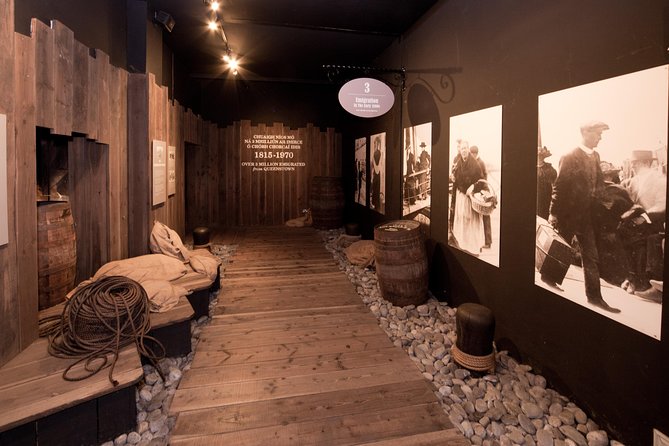
- Chronological emigration journey that follows Irish emigrants across centuries, starting in the 1600s.
- Great Famine focus with a clear sense of why people left, not just where they went.
- Titanic and Lusitania connections, placed in the wider story of Cobh as a port town.
- Interactive features like audio, video, and even Morse code typing.
- Genealogy add-ons inside, including Ancestry.com access and a genealogy consultant (hours and presence can vary).
More History Tours in Cork
- Visit 16 Sites Key Historical Sites And Experience Cobh Rebel Tours
★ 5.0 · 167 reviews - Cobh: Guided Historic Walking Tour
★ 4.6 · 32 reviews - Cobh: 3-Hour Cultural Tour Plus
★ 4.9 · 31 reviews
Entering the restored Victorian station in Cobh Heritage Centre
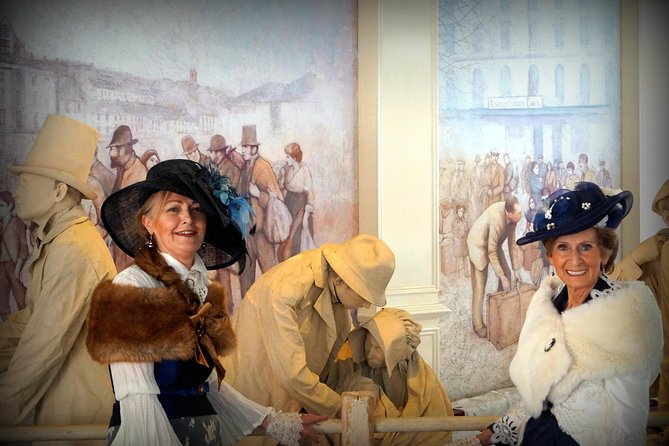
You start inside the Cobh Heritage Centre, which is housed in a beautifully restored Victorian railway station. The building matters here. High ceilings and old ironwork make the museum feel like it belongs to the port and its departure boards, not like a random room of posters. It also helps you understand the emotional logic of the exhibit, because you are physically in a place tied to movement and waiting.
With the Queenstown Story ticket, your main job is simple: walk in, get oriented, and start at the beginning. The experience is offered in English, and it is set up as an independent tour, so you control the pace. If you are the type who scans first, reads later, or pauses for video/audio, this setup works well.
If you are picky about comfort, you should know this venue is well cared for. One review called out a spotlessly clean bathroom and plentiful hand sanitizer, and another mentioned the staff being lovely. Small things like that make a museum day much less stressful.
The self-guided emigration timeline from the 1600s onward
The Queenstown Story unfolds chronologically, and that structure is a big part of why it feels clear instead of chaotic. You begin in the 1600s, when Irish emigrants left from Cobh for the Colonies of America and the West Indies. From there, the museum moves century by century, tracing where emigrants went and why departure waves shaped Irish communities.
What I like about this approach is that it refuses to treat emigration as one single event. It is not just a sad chapter at the end of a textbook. Instead, you see patterns: economic pressure, social change, and catastrophe all changing the shape of when and how people left.
A smart detail is that the museum supports different learning styles. You can read, listen, and watch. Several parts are poster-based, and there are enough interactive moments that you do not feel like you are stuck in one long corridor of text.
If you enjoy hands-on learning, look for the interactive elements. One review specifically mentioned learning how to type Morse code. That kind of activity turns a port-history topic into something you remember, not just something you pass through.
The Great Famine section and why it lands
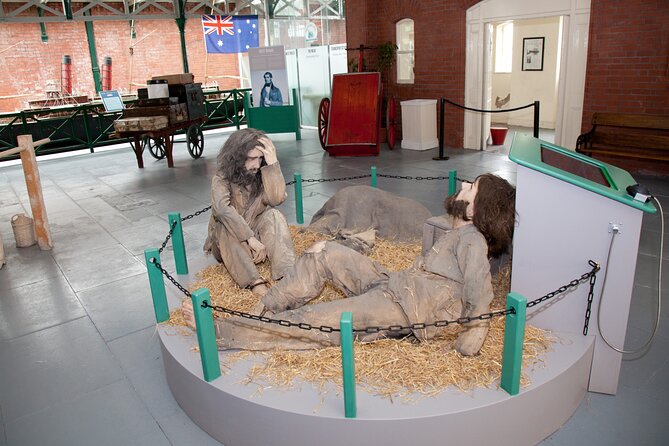
The Great Famine is a central part of the story here, not a quick mention. In a lot of museums, famine is one exhibit panel and then the tour moves on to the more famous ships. In this one, it is woven into the timeline, so the reasons behind emigration feel connected to real choices people had to make.
Be ready for the emotional tone. One review described it as overwhelming and inspiring, and another focused on how sad it felt to see how many people left and never returned. That reaction makes sense, because the museum frames emigration as lived experience, not only statistics.
Practical tip: if you are traveling with kids or if you know the subject will be heavy for you personally, pace yourself. Take breaks at the edges of the rooms. Use the audio and video sections when you can, because they often slow you down in a way that makes the story easier to process.
More Titanic and Cobh trips:
- Titanic Trail Guided Walking Tour Cobh
★ 5.0 · 253 reviews - Cork and Blarney Castle Visit from Cobh by Train
★ 4.5 · 106 reviews - Private Tour Blarney Kinsale and Cobh Viator Badge of Excellence
★ 5.0 · 51 reviews - Private Tour Blarney Kinsale & Cobh Awarded Badge of Excellence
★ 5.0 · 43 reviews
Cobh as a port with Titanic and Lusitania ties
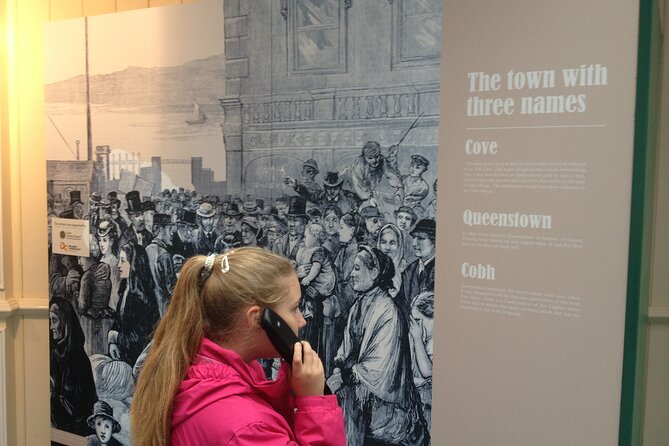
It is called the Queenstown Story, and that naming matters. Queenstown is tied to Cobh’s maritime identity, and the exhibits do a good job placing ship history inside the wider story of departure.
You get direct connections to Titanic and the Lusitania, but the bigger point is that these famous names are not presented as the whole story. Cobh’s role as a port town and the related maritime and military history are woven in, so you understand why ships of different eras mattered to people leaving Ireland.
If you are a Titanic fan, you will still likely spend extra time here. Reviews highlighted Titanic-era artifacts and history as part of what made the experience worthwhile. But even if Titanic is not your obsession, you may find the ship connections help you remember the port context, like how ocean travel shaped schedules, destinations, and families.
And since the museum is in a rail station, the crossover between land departure and sea passage feels natural. It is one continuous story across transportation modes, which is exactly what you want when you are trying to picture emigrant life.
How long should you stay: 1 to 2 hours, or more if you want
The tour is listed as about 1 to 2 hours. That is a solid planning range, especially if you mainly read the key panels and hit the interactive parts quickly. But do not treat the time window as a deadline.
One review mentioned spending around 90 to 100 minutes and not feeling rushed, and another specifically said you can stay as long as you want and even go back again the same day. That flexibility is useful if you arrive and decide you want to replay a section, or if you get pulled into a family-history thread.
My advice: aim for about 75 to 90 minutes if you are on a tight day, and give yourself 2 hours if genealogy and interactive stations are important to you.
The museum’s maximum group size is capped at 40 travelers, which also helps keep the feel manageable. Even with that cap, a self-guided experience means you can move at your own speed once you are inside.
Skip-the-line value, and when it actually matters
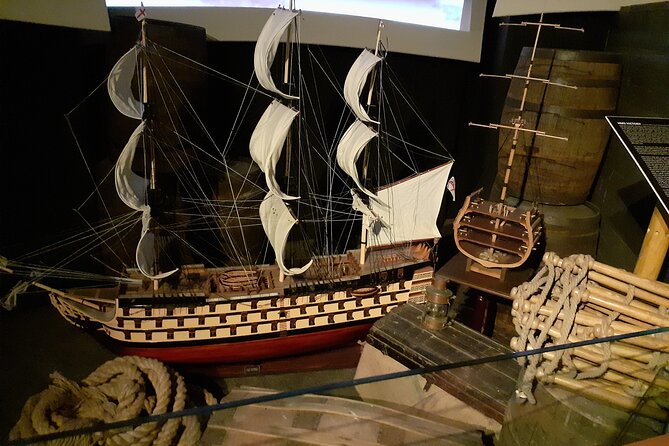
The main selling point for this experience is the guaranteed skip-the-line entry. If you are visiting during a busy period, that can be the difference between arriving to do the museum and arriving after the line makes you tired.
Here is the practical angle: even if there is no line, you still save time spent figuring out where to queue and which entrance to use. One review said there was no line when they visited, so the benefit was harder to measure. Still, that is kind of the point. A skip-the-line ticket is low-drama travel insurance.
The price is listed at $18.15 per person. For that, you are not only paying for admission. You are paying for a smoother arrival so you can spend your limited time inside the exhibits instead of standing outside.
If you are combining this with other Cobh stops, like nearby museums or waterfront walks, that time savings adds up. It is one reason this works especially well as part of a cruise day plan.
Genealogy support, Ancestry.com access, and a real-world caution
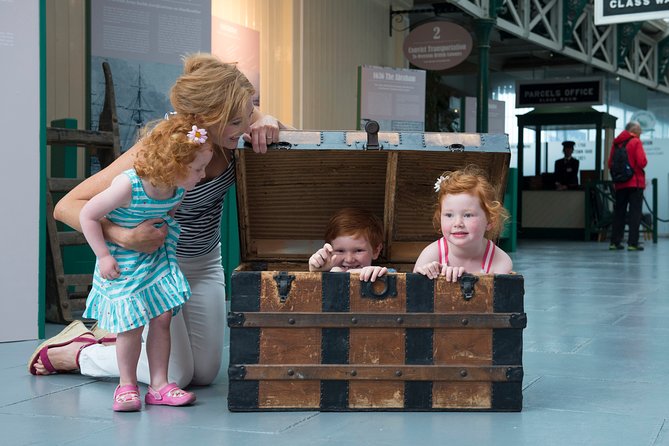
One of the most praised aspects is the genealogy element. Several reviews pointed out that there is a genealogy consultant inside and that there is Ancestry.com access. If family history is why you are in Ireland, this museum can function like a starting point, not just a lecture.
The way to make this section pay off is to go in ready. If you know surnames, approximate dates, or the port town connection for your ancestor, write it down before you start wandering. Then when you hit the genealogy area, you can use the time efficiently.
One caution from a review: there was disappointment when the genealogy consultant was not at the desk during a visit, and the visitor could not find a way to set up an appointment in advance. So, do not assume you will definitely get hands-on help at your exact time slot. If genealogy help is your top priority, plan extra time for browsing and be ready to do part of the work self-directed with what the space provides.
Cafe breaks and gift-shop time, right where you need it
Food and drinks are not included with the ticket, but you are not visiting a museum-without-snacks. The Cobh Heritage Centre has a cafe right before you enter the museum area, and multiple reviews praised it.
One review highlighted an Irish scone with cream and jam and an excellent cup of tea. Another mentioned enjoying scones and coffee, and also noted that if you finish early you can enjoy a coffee in the cafe.
That is a practical advantage. If the story sections start to feel intense, you can reset with something warm, then go back in and keep moving. Museums can be physically tiring, too, so this is a good built-in way to keep the day from dragging.
Don’t forget the gift shop. Reviews mentioned it as part of the overall experience, and it is often where you pick up a map or a focused reference if you want to connect your visit to what you do next in town.
Practical logistics that keep your visit smooth
The meeting point is at the Queenstown Story @ Cobh Heritage Centre, Deepwater Quay, Ringmeen, Cobh, County Cork. The published phone number is Tel 021 4813591. The venue operates daily 9:30 AM to 4:00 PM during the listed period, with the opening hours valid between 01/09/2026 and 12/30/2026.
You get a mobile ticket, and service animals are allowed. The site is near public transportation. Most people can participate, and the group size is limited to a maximum of 40 travelers, which can help avoid overcrowding.
One more small note: the experience ends back at the meeting point, which makes it easy to build a half-day in Cobh. If you are traveling by train from Cork City, this location is convenient. Reviews even mentioned the short walk from the train to the heritage centre and another short walk onward to the Titanic museum area. That kind of tight clustering is ideal when your schedule is tight.
Who should book this Queenstown Story ticket
This is a great fit if you want a structured, moving museum experience that connects Irish emigration to real ports, real ships, and real hardship. I think you will especially like it if you:
- Care about Irish history that includes emigration beyond the famous headlines
- Prefer self-guided touring where you can pause and reread
- Want interactive touches like audio/video and Morse code typing
- Have family connections to Cobh or want to start genealogical research
- Are visiting on a cruise day and want something close to the waterfront
It might feel less ideal if you strongly dislike reading panels, because the museum includes a lot of written material and timed audio/video elements. Also, if you want a live guide telling you what to think at every stop, the independent format will be more work on your end.
Should you book the Queenstown Story at Cobh Heritage Centre?
Yes, I would book it if you are spending time in Cobh and you want something meaningful that still respects your time. The skip-the-line entry is a smart move, and the museum’s chronological story of Irish emigration, including the Great Famine and ship connections to Titanic and the Lusitania, gives you a clear framework.
Book it sooner rather than later if you can. The experience is commonly booked about 40 days in advance, and your best travel days fill up first.
Go with about 90 minutes minimum, and plan closer to 2 hours if you want to use the genealogy area and try the interactive bits. And if genealogy help is important to you, arrive ready to work independently too, just in case the consultant is not at the desk when you show up.
FAQ
How long is the Queenstown Story at Cobh Heritage Centre?
It runs about 1 to 2 hours for most visitors. You can take more time if you want to slow down and revisit sections the same day.
Does this ticket include entry to the museum?
Yes. The admission ticket to the Queenstown Story tour at the Cobh Heritage Centre is included.
Is the experience self-guided or guided?
It is an independent, self-guided museum experience once you are inside.
What language is it offered in?
The tour is offered in English.
Where do I go at the start of the experience?
You start at The Queenstown Story @ Cobh Heritage Centre, Deepwater Quay, Ringmeen, Cobh, County Cork, P24 CY67, Ireland.
What is the price per person?
The price is listed as $18.15 per person.
Are food and drinks included?
No. Food and drinks are not included, though there is a cafe on site.
Does it matter that it is a skip-the-line ticket?
The ticket guarantees you skip the long lines so you can head inside right away.
Can I cancel and get a full refund?
Yes. You can cancel for a full refund up to 24 hours before the experience’s start time.
Are there any limits on group size?
Yes. The experience has a maximum of 40 travelers.
More History Tours in Cobh
- Dublin Historical Centre Food Tour with 8 Food Tastings & Drinks
★ 5.0 · 1,718 reviews - 2-Hour Historical Walking Tour from Dublin
★ 5.0 · 875 reviews - Historical 2-Hour Guided Walking Tour of Dublin
★ 4.7 · 865 reviews - Dublin to Cork, Blarney Castle & Cóbh Heritage Centre by train
★ 4.5 · 510 reviews
Freshly listed around Cobh
- Private Tour , Blarney Castle, jameson Distillery and Cobh.★ 5.0 · 8 reviews
- (Small Group) Shore Tour from Cork: Blarney Castle & Jameson Distillery★ 3.5 · 74 reviews
- Private Tour Blarney Kinsale & Cobh Awarded Badge of Excellence★ 5.0 · 43 reviews
- Full Day Private Tour of Jameson Whiskey, Blarney Castle & Cobh★ 5.0 · 11 reviews
- Cork and Blarney Castle Visit from Cobh by Train★ 4.5 · 106 reviews
- Private Tour Blarney Kinsale and Cobh Viator Badge of Excellence★ 5.0 · 51 reviews
- Private tour of, Blarney Castle, Cork City and Kinsale★ 5.0 · 38 reviews
- Cobh cruise excursion, Blarney, Cork & Kinsale. Car or Minibus.★ 4.5 · 13 reviews
Titanic & Cobh Tours, compared.
Dublin to Belfast Titanic, Dunluce Castle & Giant’s Causeway Tour
Read our review →
Giant’s Causeway, Dark Hedges, Dunluce and Belfast Titanic entrance fee
Read our review →
Giant’s Causeway with the Titanic Exhibition and the best of Northern Ireland
Read our review →
Cobh (Cork) to Blarney Castle & Kinsale – Shore Excursion
Read our review →
Belfast Day Tour From Dublin: Including Titanic Experience
Read our review →
Visit 16 Sites Key Historical Sites And Experience Cobh Rebel Tours
Read our review →
Full-Day Tour to Cork, Cobh and Blarney Castle
Read our review →Browse the lists this tour appears in