
REVIEW · WALKING TOURS
Dublin: Bucket List Sights Walking Tour
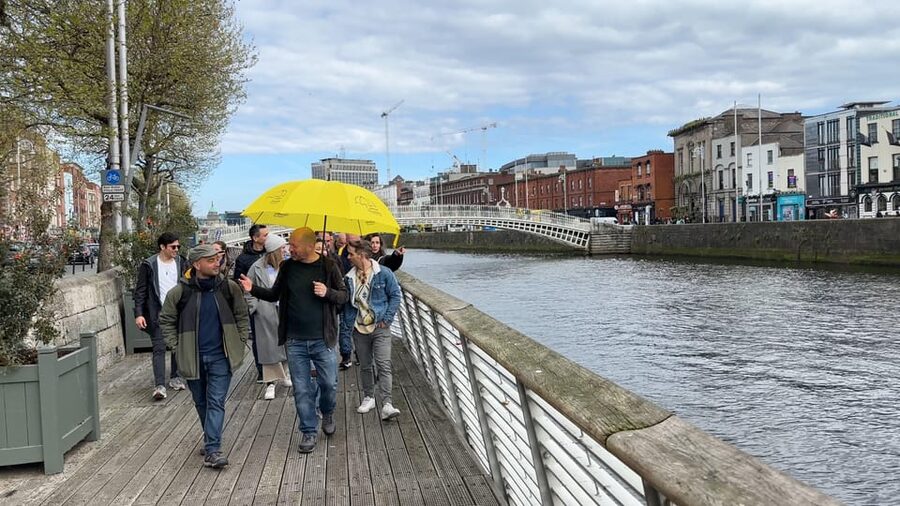
Dublin history walks past you fast. On this 2-hour walking tour with Yellow Umbrella Tours, I love how it stitches centuries together as you move from Christchurch Cathedral to Trinity College, with a friendly guide named Peter who keeps the stories human, not dusty.
Two things really made it click for me. First, I liked the way Peter connects each landmark to the Dublin you live in today, like the jump from Viking moorings to the Silicon Docks mood. Second, I liked how the tour works as an intro, because Peter adjusts to your English level and happily answers whatever extra questions you have, plus shares ideas for the rest of your stay.
One possible drawback: it is a lot to cover in just 2 hours, so you will want comfy shoes and a weather-ready layer, because you spend plenty of time outdoors between stops.
In This Review
- Key points worth knowing before you go
- Christchurch Cathedral to Christchurch Place, the Viking start you will feel
- St. Patrick’s Cathedral, snakes, Swift, and why restoration matters
- Dubh Linn Garden and Dublin Castle’s 1922 handover you can picture
- Temple Bar, Tudor-era origins, and the Liffey to Silicon Docks shift
- Ha’Penny Bridge, Merchant’s Arch, Central Plaza, and College Green’s government look
- Trinity College, Book of Kells territory, and how to use this stop well
- Price, time, and whether this Dublin walking tour is a smart value
- Should you book the Dublin Bucket List Sights Walking Tour?
- FAQ
- How long is the Dublin Bucket List Sights Walking Tour?
- Where does the tour start, and how do I find the guide?
- Is the tour in English?
- Which major sights are included on the route?
- Is this experience wheelchair accessible?
- What is the price, and can I cancel or pay later?
Key points worth knowing before you go
- Viking to neo-Gothic storytelling at Christchurch, with the Henry Roe money detail
- St. Patrick’s Cathedral links to Jonathan Swift and a Guinness-era restoration
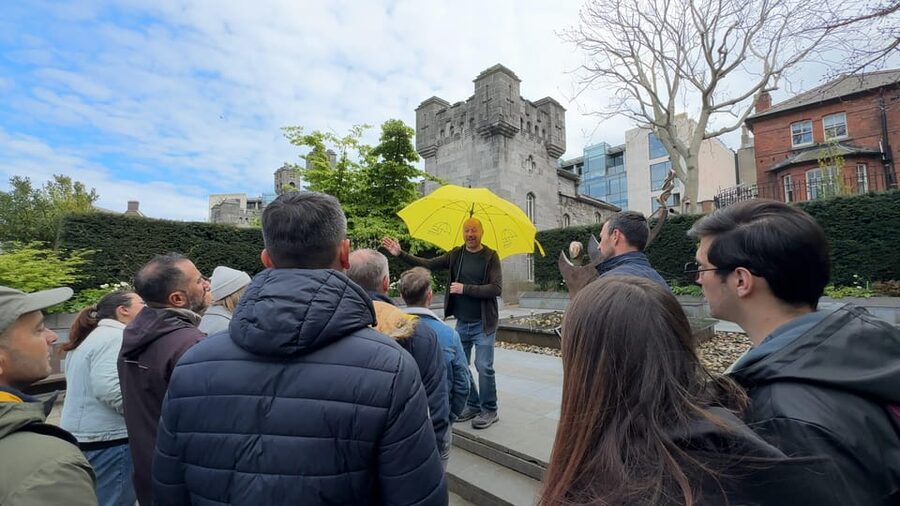
- Dublin Castle frames 700 years of British government, ending in 1922
- Temple Bar meets Tudor-era streets, where live music and pub culture take over
- Ha’penny Bridge to College Green gives you modern city views plus government-and-finance architecture
- Trinity College ends the walk at the front gate, right by the Book of Kells area
Christchurch Cathedral to Christchurch Place, the Viking start you will feel
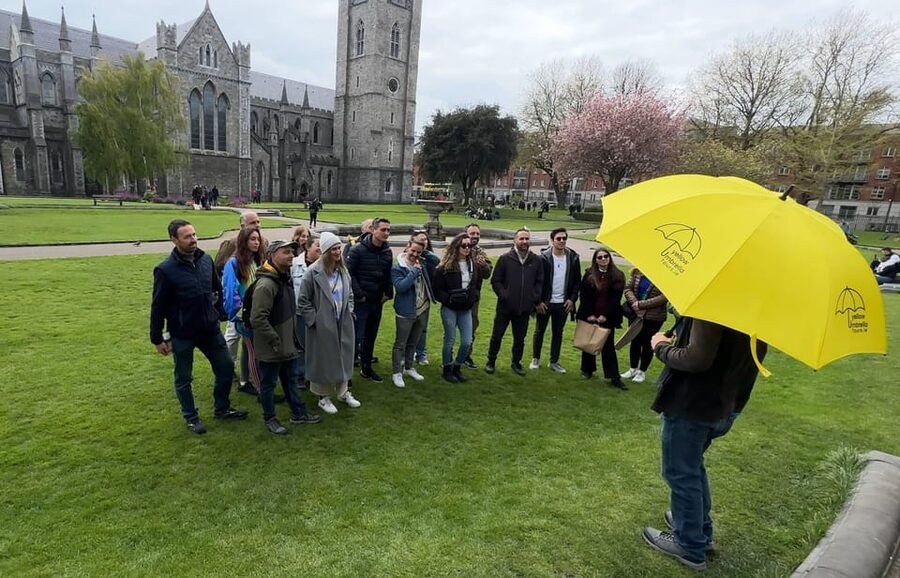
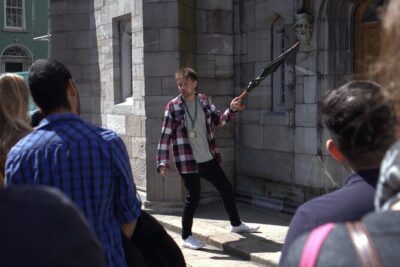
The tour begins at Christchurch Place, across the road from Christchurch Cathedral, and you will meet your guide outside the Bull and Castle. Look for the yellow umbrella, because it makes the start easy when you are scanning a busy street.
What I love about this first leg is the way the guide frames the cathedral as a timeline you can actually stand in. Christchurch Cathedral has roots going back to the Vikings, starting as wooden building work long ago, then later recast in stone by the Normans. When you’re there in person, it helps to understand that you are not seeing one single style. You’re seeing Dublin layers, stacked. That’s the theme you’ll keep noticing all day.
Then comes the detail that makes it feel specific, not generic: the spectacular 19th-century neo-Gothic cathedral look is tied to the whiskey money of Henry Roe. You will hear the point, which is that Dublin wealth and influence often show up in places like this, even when the building is far older than the money story.
Practical tip: start the tour fresh. If you arrive tired, you will still like the stops, but you might miss how much the guide is connecting between eras. This is one of those walks where paying attention for two hours saves you from hunting down explanations later.
More Walking Tours in Dublin
- Dublin Highlights and Hidden Gems Guided Walking Tour
★ 5.0 · 6,020 reviews - Dublin: Highlights and Hidden Gems Walking Tour
★ 4.9 · 2,140 reviews - 1916 Rebellion Walking Tour
★ 5.0 · 1,605 reviews
St. Patrick’s Cathedral, snakes, Swift, and why restoration matters
Next up is St. Patrick’s Cathedral, and the guide makes the name feel more personal than you might expect. You’ll hear it tied to Dublin’s beloved patron saint, including the story that he banished snakes from the island. Even if you treat the legend as legend, it gives you context for why this cathedral carries real emotional weight in Irish identity.
Inside the larger Dublin story, the cathedral also connects to literature. Peter points out the burial place of Jonathan Swift, the dean associated with Gulliver’s Travels. That matters because it turns a must-see church into something you can connect to from your own reading life. You might walk out of the cathedral thinking about Swift’s satire differently, because you saw where he is linked physically to Dublin.
Another smart piece of context is restoration. The current cathedral you visit today was wonderfully restored with help from Sir Benjamin Lee Guinness in the 1860s. This is where the tour gets practical in a subtle way: buildings do not stay themselves forever. People fund repairs, and choices get made about what to preserve and what to restore. You’re not just looking at stone, you’re looking at decisions across time.
If you care about architecture, this stop is excellent because you’ll notice the mix of solemn space and city-scale importance. If you just want a quick taste, it still works because the major story beats are clear and paced.
Dubh Linn Garden and Dublin Castle’s 1922 handover you can picture
After St. Patrick’s, the walk heads toward Dubh Linn Garden, a key connector stop that helps you see Dublin’s origin story from another angle. The guide ties it to the Chester Beatty Library location and also to Viking history, including where Vikings moored their long boats when they arrived in Dublin about twelve hundred years ago.
This part of the tour helps you understand something important about Dublin: the city’s big landmarks are not isolated. They are connected by waterways, settlement points, and shifting power. When you stand near a garden space, it can feel like a pause, but it’s really a bridge between religious Dublin and administrative Dublin.
Then you move into Dublin Castle, and that is where the timeline gets big. The tour covers the medieval and Georgian mix you can see around the castle, and you’ll get the big political point clearly: Dublin Castle was the centre of British government in Ireland for about 700 years. The guide then brings it to independence in 1922, with the handover associated with Michael Collins and the Irish Free State.
This stop is valuable even if you are not a history fanatic, because it gives you a framework for how to read the city. Ireland’s political story is part of the streets. Once you know this castle role, other parts of Dublin start to make more sense.
The only caution here is attention span. Castle grounds can be visually impressive, but there is a lot to absorb. Keep your questions ready for your guide. Peter is the kind of guide who answers, and asking one good question can unlock the rest of the stop for you.
Temple Bar, Tudor-era origins, and the Liffey to Silicon Docks shift
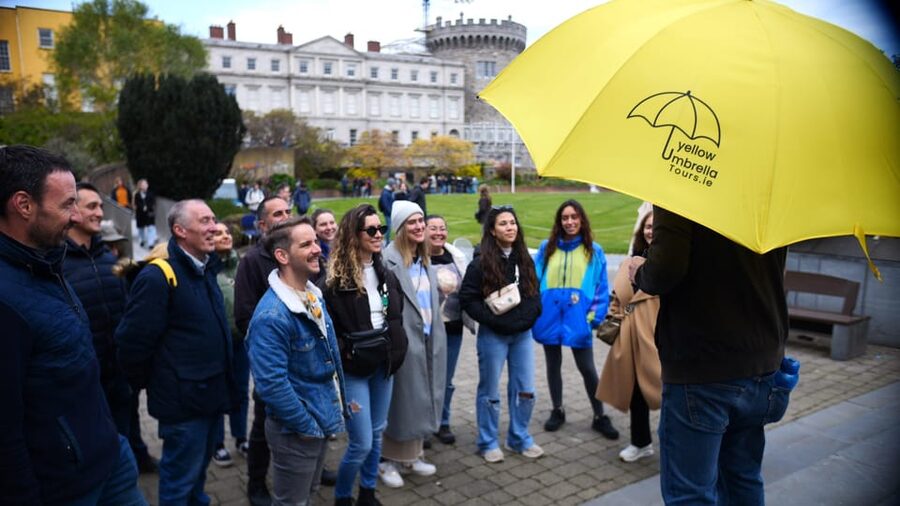
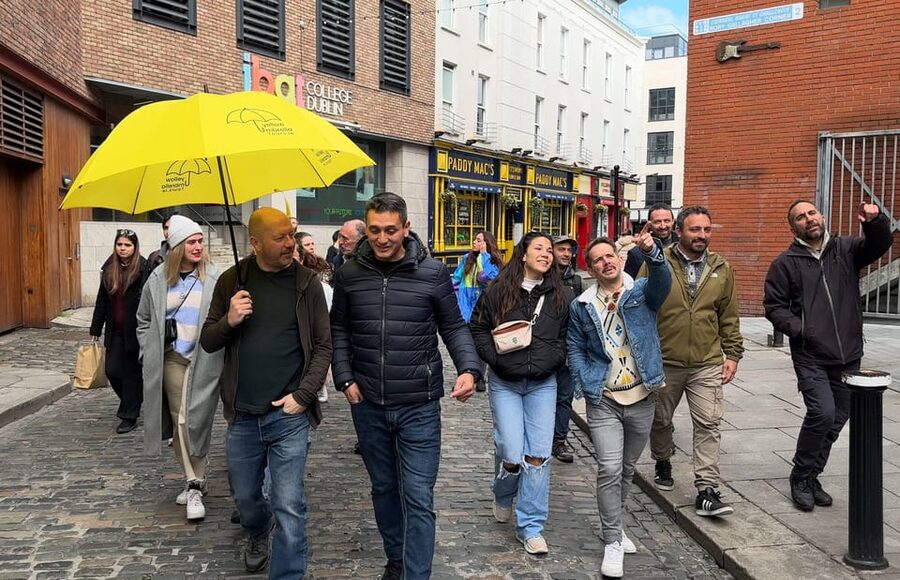
Temple Bar District is next, and it might be the easiest place to understand why this tour is built like a story. You go from castle power and formal history to a neighborhood where pubs and live music set the mood.
You’ll see one of the oldest parts of the city dating from the Tudor Conquest in the 16th century. Then, right after that, the tour points out what it has become today: a lively centre of Irish pubs, live music, and nightlife. This contrast is the point. Dublin holds older street foundations and then gives them new life.
From Temple Bar, you head toward the River Liffey. This is where the route does something clever: it takes you from the north side viewpoint linked to the original Celtic settlement about 2,100 years ago, and then it connects that old settlement to the 21st-century influence associated with American companies in the Silicon Docks.
That jump could sound like trivia, but it becomes a mindset. Dublin is not stuck in the past. It keeps changing, and you can literally spot the idea as you move across the river and along key viewpoints.
Practical tip: if you are taking photos, keep a quick battery check now. The Liffey segments and bridges tend to produce the best shots, and you do not want to find out you are at 3 percent power.
The guide also keeps the flow moving, which is good because Temple Bar can get busy. If you prefer quieter moments, you can still enjoy the story, but try to keep your pacing steady and do not linger too long in the most crowded pub streets.
A different sort of day out in Ireland:
- Dublin to Cliffs of Moher, including Wild Atlantic Way and Galway
★ 5.0 · 23,331 reviews - From Dublin: Cliffs of Moher, Burren & Galway City Day Tour
★ 4.8 · 18,888 reviews - Dublin: Guinness Storehouse Entry Ticket
★ 4.6 · 16,863 reviews - Dublin to Cliffs of Moher, Burren, Wild Atlantic Way, Galway Tour
★ 5.0 · 12,924 reviews
Ha’Penny Bridge, Merchant’s Arch, Central Plaza, and College Green’s government look
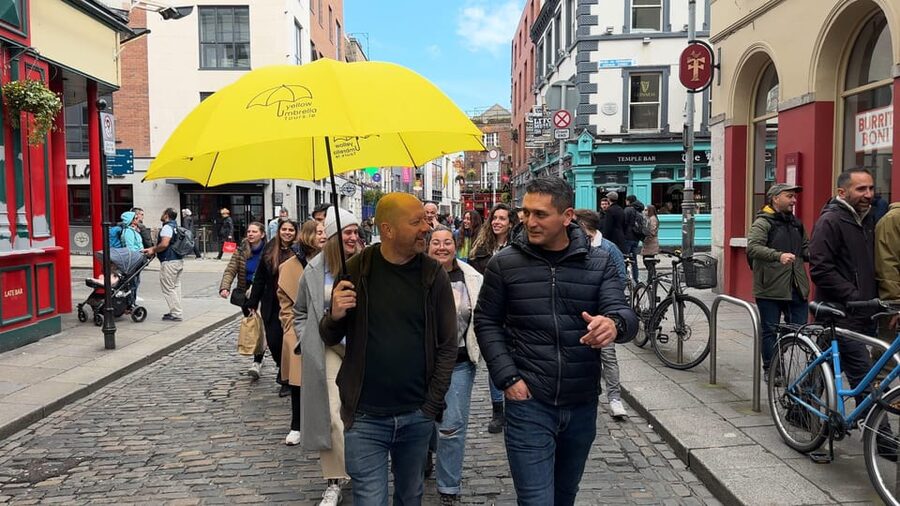
After crossing the area around the Liffey, you’ll return across the Ha’Penny Bridge, then move through Merchant’s Arch and toward Crown Alley. This section is more than just walking. It sets up a shift from party-night Dublin back to the city’s formal power spaces.
Here the guide points out Sam Stephenson’s brutalist behemoth at Central Plaza. Even if brutalism is not your favorite style, hearing it described in plain language helps. It is a reminder that Dublin also has modern, sometimes harsh architectural choices, and the city is not frozen in medieval charm.
Then you reach College Green, where you get some of the finest neoclassical Georgian architecture. The tour frames this as the centre of government and finance in the city that considered itself the 2nd city of the Empire. That kind of line might sound grand, but standing there makes it click, because the buildings look like they were designed to project authority.
This area is also where the city’s story becomes personal. The tour includes a stop to greet Dublin’s favorite daughter, Molly Malone, outside St. Andrew’s Church. It’s a short moment, but it’s a useful reminder that Dublin’s identity lives in characters and street legends, not just institutions.
What you’ll take away from this stretch is that Dublin is layered both in time and in feeling. You get a viewpoint on power, then a warm nod to popular culture, then a clear runway toward your final destination.
Trinity College, Book of Kells territory, and how to use this stop well
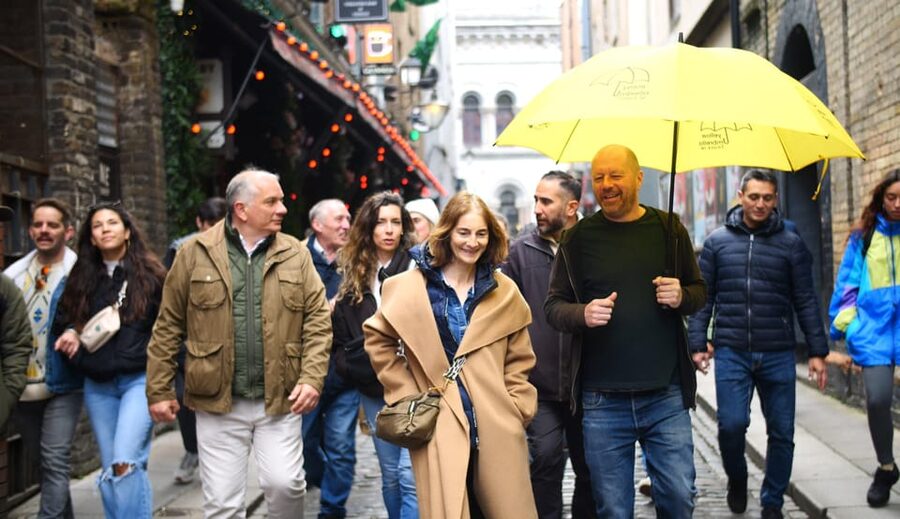
You finish the walk outside the front gate of Trinity College, at the end of the ramble. This is where the tour naturally points you toward what many people come to see: the Book of Kells exhibition.
Even though the tour ends at the front gate, I like that it puts Trinity in context instead of treating it as a random photo stop. You’ve already walked through religious sites, government power, pub culture, and street history. Then you end in the academic space tied to Ireland’s written and artistic legacy.
This makes Trinity feel like a payoff, not just the last stop on a checklist. If you plan to visit the Book of Kells exhibit afterward, you are in the right headspace. You will understand what the guide meant about Dublin’s long memory and why institutions here matter.
Practical advice: if you are planning tickets for Trinity, give yourself a buffer. Since the tour lasts 2 hours and ends back at the meeting point area, you might want to build in time for moving from the gate into any next stop you choose, especially if you want photos without rushing.
Also, ask your guide one last question right near the end. Peter’s strength was not just delivering facts, it was personalizing recommendations based on what you care about, whether that is architecture, history, or where to walk next after the tour.
Price, time, and whether this Dublin walking tour is a smart value
This tour costs $19 per person and runs 2 hours. For that price, you are buying two main things: focused time and a local guide to connect the dots. Dublin is a city where landmarks cluster, but the meaning can be confusing if you wander alone. This walk gives you a planned route that moves through the biggest famous sites without turning it into a rushed sprint.
I also think the value improves because the guide is live and flexible. The tour is in English, and from what I experienced through the guide style described, Peter adapts to your English level and handles questions. That kind of responsiveness is hard to replicate with a free audio app.
Now, the time limit is real. Two hours means you will not get deep museum-level coverage of every stop. If you want long interior visits, you’ll likely treat this as the framework and then build from there on your own.
Who it suits best:
- First-time visitors who want a fast orientation and a clear story
- People who like architecture and want it explained in plain terms
- Solo travelers or couples who appreciate a guide who asks about you and then tailors advice
Who might want something different:
- Anyone who wants a slow, sit-down pace with lots of indoor time at each stop
- Travelers who prefer self-guided tours with no group movement
Should you book the Dublin Bucket List Sights Walking Tour?
I’d book it if you want an efficient, story-led Dublin walking tour that hits the city’s headline landmarks and connects them into one timeline. The combination of Christchurch, St. Patrick’s, Dublin Castle, Temple Bar, and Trinity College in just 2 hours is exactly what many first trips need.
I’d also book it if you care about context, not just sightseeing. The Henry Roe whiskey money detail at Christchurch, the Swift and Guinness restoration connections at St. Patrick’s, and the 1922 handover framework at Dublin Castle are the kinds of specifics that make the city stick in your memory.
One more thing: if Peter is your guide, you’re in good hands. The best part of the experience is how personal the tour feels, and how easy it is to get answers and follow-up tips for the rest of your stay.
If you are wondering whether you will enjoy it, ask yourself one question: do you want Dublin explained while you walk? If yes, this is a strong pick.
FAQ
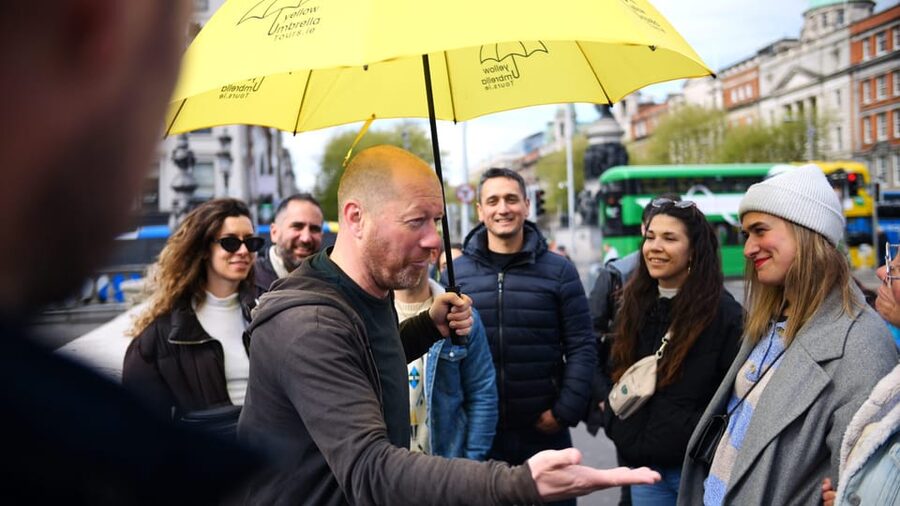
How long is the Dublin Bucket List Sights Walking Tour?
The tour duration is 2 hours.
Where does the tour start, and how do I find the guide?
You meet your guide across the road from Christchurch Cathedral, outside the Bull and Castle. Look for the yellow umbrella.
Is the tour in English?
Yes, the live tour guide is in English.
Which major sights are included on the route?
The tour covers Christchurch Cathedral, St. Patrick’s Cathedral, Dublin Castle, Temple Bar, and ends outside the front gate of Trinity College (near the Book of Kells exhibition area).
Is this experience wheelchair accessible?
Yes, the tour is listed as wheelchair accessible.
What is the price, and can I cancel or pay later?
The price is $19 per person. You can reserve and pay later, and free cancellation is available up to 24 hours in advance for a full refund.
Freshly listed around Dublin
- Wicklow Mountains Private Day Tour including Glendalough★ 5.0 · 7 reviews
- Wicklow: Private Day Tour from Dublin★ 5.0 · 5 reviews
- Women Of Ireland: Trailblazers & Pioneers★ 5.0 · 4 reviews
- Full Day Private Wicklow Tour★ 5.0 · 12 reviews
- Wicklow tour of Glendalough★ 4.5 · 8 reviews
- Wicklow Mountains & Glendalough Luxury Private Day Tour★ 5.0 · 23 reviews
- Premium Irish Whiskey Tasting Hosted by Local Dublin Expert★ 5.0 · 77 reviews
- Whiskey Tasting Tour of Dublin★ 5.0 · 117 reviews
Walking Tours, compared.
Dublin Highlights and Hidden Gems Guided Walking Tour
Read our review →


90 Minute Dublin Walking tour and Sightseeing tips
Read our review →

Historical 2-Hour Guided Walking Tour of Dublin
Read our review →
Dublin Traditional Irish 3 Course Meal Walking Tour with Local
Read our review →
Browse the lists this tour appears in