
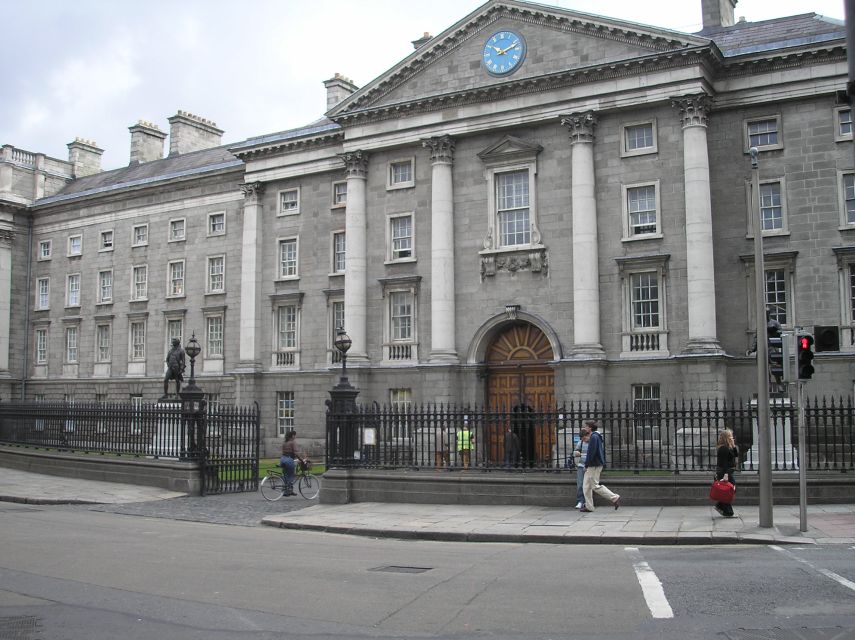
REVIEW · WALKING TOURS
Dublin: Highlights and Hidden Corners Walking Tour
A quick look at Dublin becomes a real story on foot. This 2.5-hour small-group walk strings together major sights and the offbeat details people miss, with professional guides who keep things clear and fun. I especially like how you get both sides of the river and a sense of how Dublin grew.
One more thing I like: you leave with a mental map you can actually use later, from O’Connell Street to Trinity College. A possible drawback is that everything you see is external, so you will get views and context, not indoor time at each stop.
In This Review
- Key highlights worth your attention
- Dublin on foot: why this tour works so well as a first day
- Starting on Dame Street at the Tree of Gold statue
- Dublin Castle grounds and the Christ Church Cathedral area
- Fishamble Street and Smock Alley: Dublin gets weird here
- Temple Bar edges: Meeting House Square to the river crossing mood shift
- The Italian Quarter and St Mary’s Church, now a café or bar
- Henry & Moore Streets, and the streets that feel like a collage
- O’Connell Street: Dublin’s big stage and the 1916 crossroads
- Former Parliament House, now Bank of Ireland, and the final political thread
- Finishing near Trinity College and the Book of Kells area
- Guides, pacing, and the small details that make it feel worth it
- Who this tour suits best in Dublin
- Price and value: $31 for 2.5 hours in the middle of it all
- Should you book this walking tour?
- FAQ
- How long is the Dublin Highlights and Hidden Corners Walking Tour?
- Where does the tour start?
- Are you able to go inside places during the tour?
- What is included in the ticket price?
- Is the tour wheelchair accessible?
- How much does it cost and what about cancellation?
Key highlights worth your attention
- Maximum 16 people, often less, so it feels personal and not chaotic
- External-only visits, with lots of story time and photo-worthy views
- Two sides of the River Liffey, from medieval quarters to modern city streets
- Quirky Dublin details, like a church that is not a church and a Lisbon tram turned café
- Small surprises on the route, including a wobbly bridge moment and a post-box tied to independence
- Trinity College finish area, including the famous Book of Kells site from outside
Dublin on foot: why this tour works so well as a first day
If your Dublin plan is still fuzzy, this kind of walking tour is a smart move. In about 2.5 hours, you cover big-name landmarks and the smaller street-level stuff that makes the city feel lived in. It is an easy-going, practical route that helps you understand where things are, and why they matter.
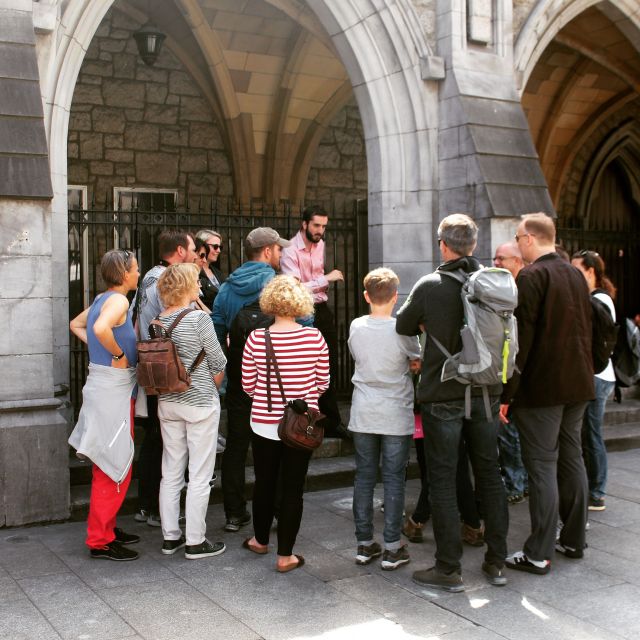
The small-group size is a real factor here. With a maximum of 16 and sometimes fewer, you are not lost in a crowd, and you can ask questions without shouting. Guides are also described as friendly and professional, and you can feel that in the pacing and the explanations.
One thing to set expectations: this is not an entry-fee marathon. The tour visits places from the outside, with options to see interiors only after the walk, if you want to keep exploring on your own. That keeps the schedule moving and lets you spend your time in the streets where Dublin is most vivid.
More Walking Tours in Dublin
- Dublin Highlights and Hidden Gems Guided Walking Tour
★ 5.0 · 6,020 reviews - Dublin: Highlights and Hidden Gems Walking Tour
★ 4.9 · 2,140 reviews - 1916 Rebellion Walking Tour
★ 5.0 · 1,605 reviews
Starting on Dame Street at the Tree of Gold statue
You meet on Dame Street at the Tree of Gold Statue, at the corner of Dame Street and Fownes Street Upper. This spot is central and easy to find, which matters on day one when you are still figuring out transit and street directions.
From here, the walk naturally steps backward in time. You move into the former Viking and medieval quarter, so the city suddenly feels less like a collection of landmarks and more like a timeline you can follow at walking speed.
A practical note: Dame Street is busy. Give yourself a minute to gather your group and orient your phone maps before you start moving.
Dublin Castle grounds and the Christ Church Cathedral area
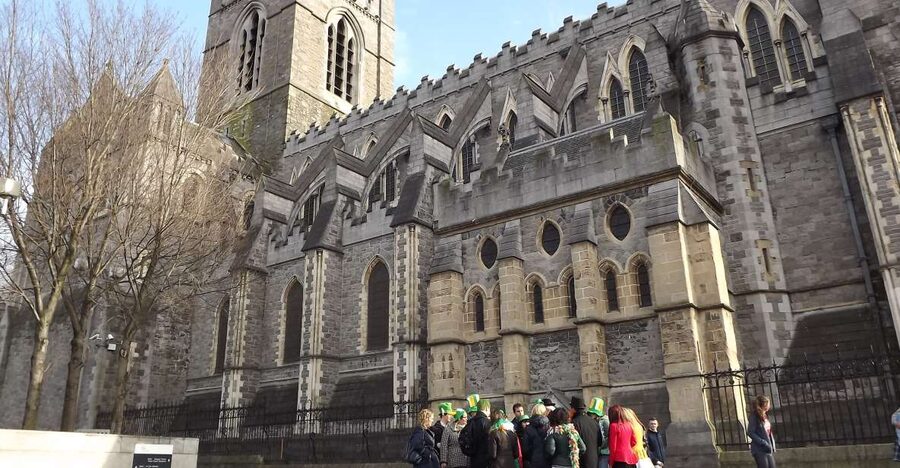
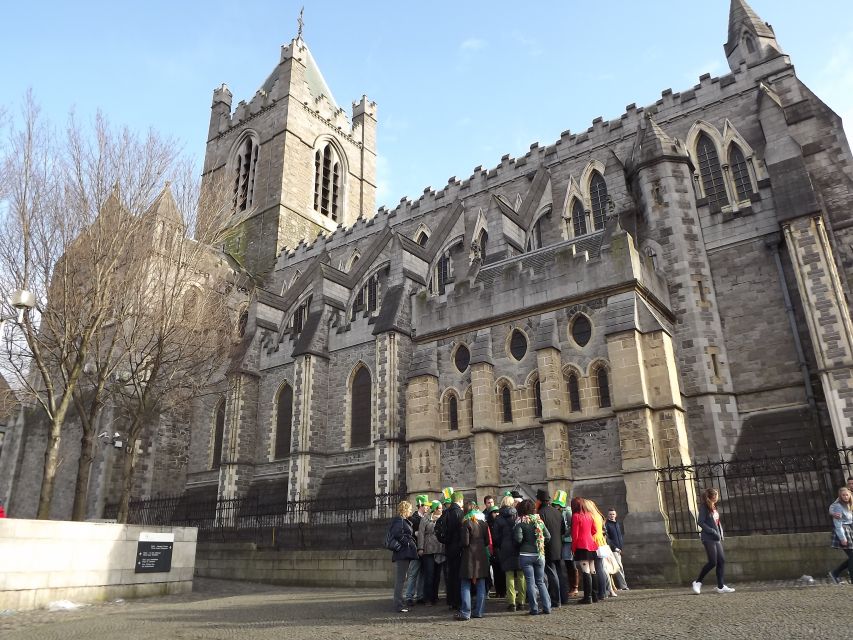
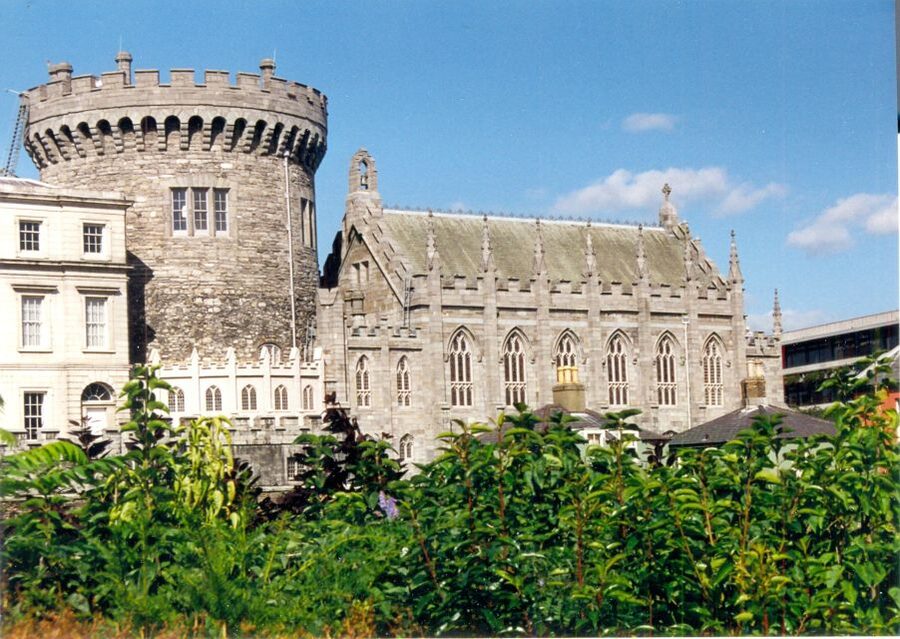
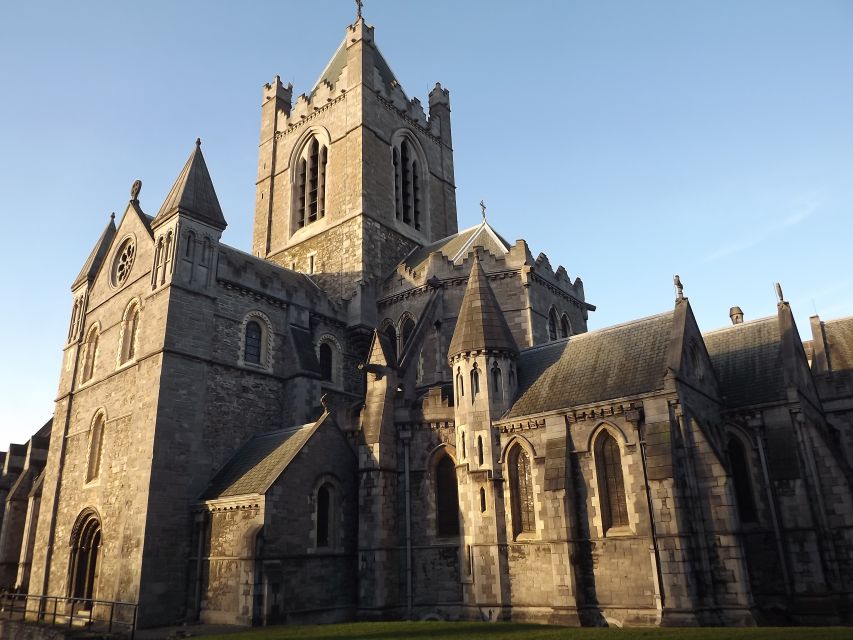
Early on, you get the medieval core. You will pass the Dublin Castle grounds and gardens (external views) and then reach Christ Church Cathedral (also external). Even without going inside, you can still spot the scale and the way the buildings dominate the area.
Why this stage matters: it sets the tone for everything else you will see. Dublin’s later streets, institutions, and power centers do not appear from nowhere. They grow out of these older anchors, and your guide’s stories help you connect the dots.
This is also where architecture starts to click. When you see the castle grounds and cathedral frontage close up, you understand why locals treat this part of town as a civic center, not just a tourist stop. It makes your later photos around Trinity and the Liffey feel more grounded.
Fishamble Street and Smock Alley: Dublin gets weird here
Next comes a stretch that feels both historic and surprisingly creative. Fishamble Street and Smock Alley give you a strong sense of Dublin’s street texture, the narrow lanes and corners that make the city feel compact even when it is busy.
This is the part of the tour where your guide may point out small surprises that do not look important at first glance. The goal is not just to name streets. It is to help you notice, like where Dublin hides its quirky layers.
You will hear about things like Dublin’s first defunct full-time cinema and a church that is now something else. You might also hear about a former Lisbon tram turned café, the kind of fun repurposing that makes Dublin feel inventive rather than frozen in time.
A different sort of day out in Ireland:
- Dublin to Cliffs of Moher, including Wild Atlantic Way and Galway
★ 5.0 · 23,331 reviews - From Dublin: Cliffs of Moher, Burren & Galway City Day Tour
★ 4.8 · 18,888 reviews - Dublin: Guinness Storehouse Entry Ticket
★ 4.6 · 16,863 reviews - Dublin to Cliffs of Moher, Burren, Wild Atlantic Way, Galway Tour
★ 5.0 · 12,924 reviews
Temple Bar edges: Meeting House Square to the river crossing mood shift
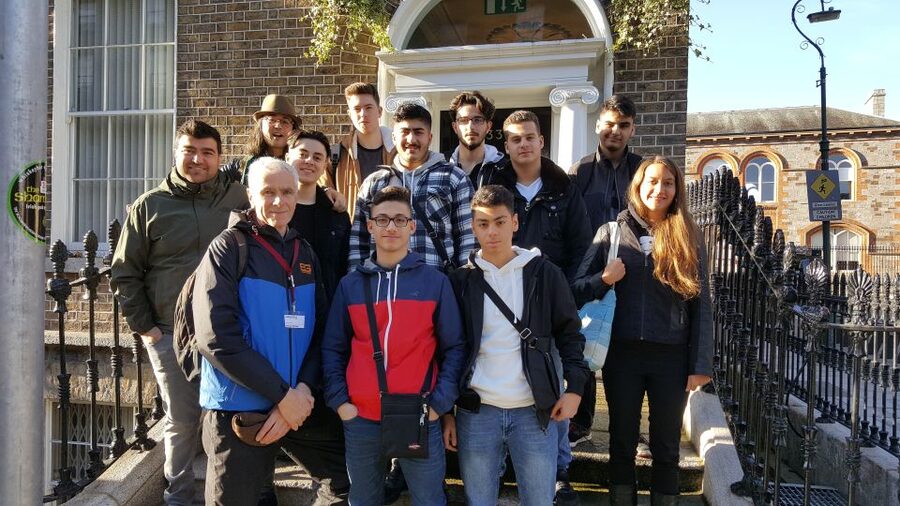
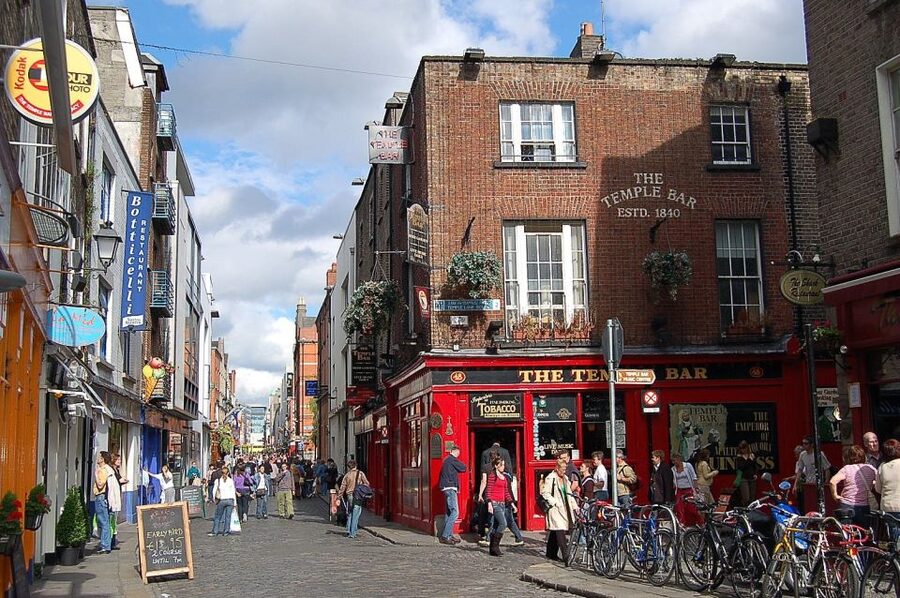
When you reach the Temple Bar area, the vibe changes. You will pass Meeting House Square and then move toward the lively parts of central Dublin, still staying in the story-rich zone rather than turning the tour into a nightlife detour.
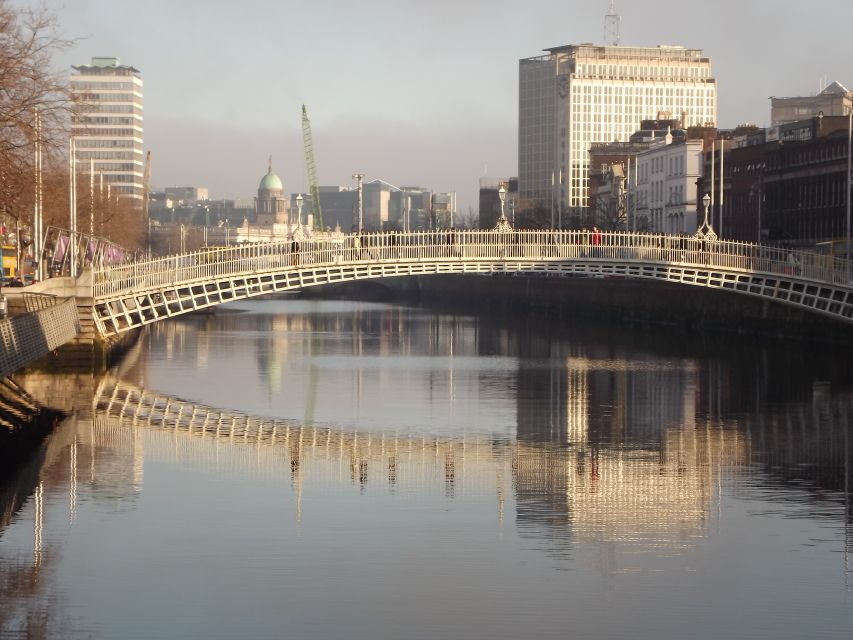
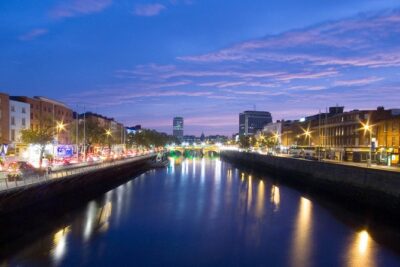
Then comes the move toward the Millennium Bridge and the River Liffey. This is where you get that classic Dublin postcard view, plus a more physical connection to the city. Your guide may make a point out of the bridge being wobbly in a very memorable way, which is exactly the sort of detail that helps you remember where you were, and why it mattered.
This bridge-and-river section is also practical. It helps you understand how Dublin’s two halves relate. Once you cross the Liffey on foot as part of a story, later walks feel easier, even if you go off on your own.
The Italian Quarter and St Mary’s Church, now a café or bar
Crossing to the north side means you start seeing Dublin’s mix of old and newer identities. You will pass through the Italian Quarter, where streets feel more like a neighborhood than a museum.
Right near this area, you also visit St Mary’s Church, which is now a famous café or bar (external). Even if you have no interest in architecture for its own sake, this stop usually works because it shows how Dublin reuses spaces. A building can keep its bones and still change its role in daily life.
If you like offbeat art and odd Dublin symbolism, this stretch is built for you. Your guide may reference a representation of a da Vinci painting and help you understand why locals find these kinds of references funny or meaningful.
Henry & Moore Streets, and the streets that feel like a collage
As you continue, you will move past Henry & Moore Streets. This is one of those routes that feels like a collage of Dublin, small signs, textures, and layers. Without needing to enter any building, you start to see how neighborhoods evolve block by block.
Your guide will often weave in human stories here. That is the difference between a list of monuments and a walk that gives you context you can use later. The city turns into something you can read, not just something you look at.
It is also a good section for photos. The streets are tight, and the variety of storefronts and facades makes it easy to frame shots that look like Dublin, not just like any European downtown.
O’Connell Street: Dublin’s big stage and the 1916 crossroads
Then you get to the wide boulevard energy of O’Connell Street. This is where Dublin feels ceremonial and official at the same time, and it is also where the walking route keeps your momentum.
You will pass the General Post Office, tied to the 1916 Rising story of rebellion and disruption. This area is powerful because it sits at the center of the city’s political memory. Even from the outside, you can feel why the street became a symbol of national change.
A key stop here is also the O’Connell Monument and the surrounding framing of the street. Your guide’s explanation helps you see it as more than a statue on a busy corner. It becomes part of the city’s self-image.
If you enjoy learning how public spaces get used for both daily life and national identity, this portion is worth the full price by itself.
Former Parliament House, now Bank of Ireland, and the final political thread
Moving along the main historic street, you will reach the Former Parliament House, now the Bank of Ireland. Like many Dublin buildings, it shows how institutions shift over time while keeping their presence in the urban layout.
Why this matters in a tour like this: it gives you a clean thread from rebellion and public buildings toward finance and modern governance. It also helps you understand why Dublin’s center feels extra dense with history, because so much of it is still in use.
You will also hear the story of a post-box tied to Ireland’s transition to independence. It sounds like a small detail, but it is exactly how the best street tours work. They take one overlooked object and show you what it means in the bigger timeline.
Finishing near Trinity College and the Book of Kells area
You end around the Trinity College area, with the tour leading you to the Book of Kells famous reference point from outside. This finale is a smart way to wrap up, because Trinity is one of the first names most people learn about Dublin.
Even without going in, finishing here helps you connect what you saw earlier. The city’s civic power, religious landmarks, and political memory all funnel into the kind of cultural legacy Trinity represents.
If you want to do something right after the tour, this is the perfect time. You will be close to the action and you will understand why it fits the story you just walked through.
Guides, pacing, and the small details that make it feel worth it
The biggest praise for this tour is almost always the guide. Names like Joe Brennan, John O’Flynn, Jacob, Katie, and Dave show up in the guidance style people talk about, with consistent themes like humor, clear explanations, and a pacing that generally feels just right.
You should know pacing can be a personal thing. Some people prefer a slower walk, and if you are the type who takes your time on sidewalks, you may want to ask for a gentle rhythm early on. The good news is that the tour is designed to stay easy-going rather than rushed, and the group is small enough for adjustments.
In terms of what you will learn, the stories are built around everyday symbolism. That includes quirky art references, a wobbly bridge moment, repurposed spaces like St Mary’s, and even a stark-naked representation of a famous 18th century composer. It sounds odd until you see it, and then you realize that Dublin’s humor is part of how the city remembers itself.
Who this tour suits best in Dublin
This is ideal for:
- First-time visitors who want major landmarks plus side streets without spending the whole day traveling between far-apart stops
- People who like stories that connect buildings to real life, not just dates and names
- Anyone who wants a map of central Dublin so their next walks make sense immediately
- Travelers who appreciate a small group and an experienced guide
It can be less ideal if you want lots of interior visits. Since you see things externally, it is better as a set-up tour. Then you can pick a few places to go inside on your own based on what grabbed you.
Price and value: $31 for 2.5 hours in the middle of it all
At $31 per person for about 2.5 hours, the value comes from concentration. You get a guided route through City Hall area sites, Dublin Castle grounds, Christ Church, Temple Bar edges, O’Connell Street, and Trinity surroundings without wasting time figuring things out alone.
You also get a professional guide and a manageable group size. That matters because Dublin’s center is walkable but also layered. A good guide turns random streets into a coherent route you can keep using after the tour.
If you are spending only a short time in Dublin, this price feels easier to justify than multiple separate stand-alone tickets and wandering sessions. It is a practical way to start, especially if you plan to do additional self-guided exploring afterward.
Should you book this walking tour?
Yes, if you want a first-day Dublin that gives you direction and character fast. It is built for people who enjoy learning while walking, who like both famous sites and the oddball details that make a city feel human.
I would skip it only if your top priority is going inside buildings during the tour. Since the visits are external, you will need follow-up time for interior attractions.
If your goal is to get your bearings quickly, understand why the Liffey split matters, and spot Dublin’s quirky symbolism like the post-box and the wobbly bridge moment, then this is a strong booking.
FAQ
How long is the Dublin Highlights and Hidden Corners Walking Tour?
The tour lasts about 2.5 hours.
Where does the tour start?
It starts at the Tree of Gold Statue, Central Plaza, Dame Street, Dublin 2 (corner of Dame Street and Fownes Street Upper).
Are you able to go inside places during the tour?
All visits are external. Opportunities may be available for interior visits after the tour.
What is included in the ticket price?
A professional well trained guide is included. The tour is a live, English-language walking tour.
Is the tour wheelchair accessible?
Yes, the tour is listed as wheelchair accessible.
How much does it cost and what about cancellation?
The price is $31 per person. You can cancel up to 24 hours in advance for a full refund.
Freshly listed around Dublin
- Wicklow Mountains Private Day Tour including Glendalough★ 5.0 · 7 reviews
- Wicklow: Private Day Tour from Dublin★ 5.0 · 5 reviews
- Women Of Ireland: Trailblazers & Pioneers★ 5.0 · 4 reviews
- Full Day Private Wicklow Tour★ 5.0 · 12 reviews
- Wicklow tour of Glendalough★ 4.5 · 8 reviews
- Wicklow Mountains & Glendalough Luxury Private Day Tour★ 5.0 · 23 reviews
- Premium Irish Whiskey Tasting Hosted by Local Dublin Expert★ 5.0 · 77 reviews
- Whiskey Tasting Tour of Dublin★ 5.0 · 117 reviews
Walking Tours, compared.
Dublin Highlights and Hidden Gems Guided Walking Tour
Read our review →

90 Minute Dublin Walking tour and Sightseeing tips
Read our review →

Historical 2-Hour Guided Walking Tour of Dublin
Read our review →
Dublin Traditional Irish 3 Course Meal Walking Tour with Local
Read our review →
Browse the lists this tour appears in