
REVIEW · WALKING TOURS
Dublin Private Walking Tour | 3 hour Highlights & Hidden Gems
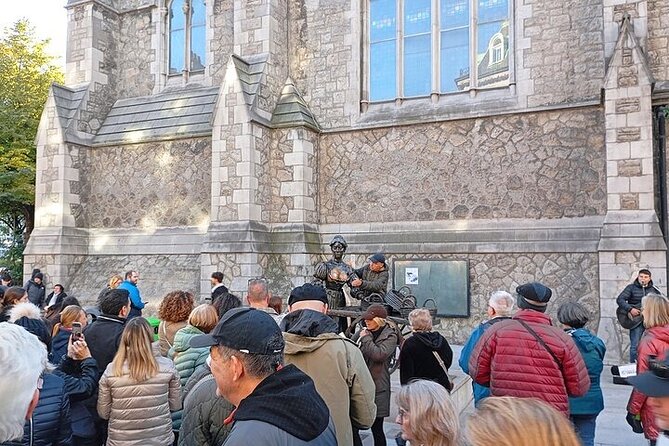
Dublin is best read on foot. This private 3-hour walk strings together the big-name sights and the smaller story-signposts, so you leave with a clearer map of how modern Ireland was shaped. You start by meeting at the Molly Malone Statue and wind through Dublin’s political, cultural, and literary heart.
I especially like how personal this feels because it is truly 100% private for just your group. I also like the way the guide connects places to dates, songs, and everyday city details, including practical tips for food, drinks, and traditional music venues after the tour. The guide energy matters here, and in the experiences led by David Ryan, that energy shows in storytelling plus extra context like photos and a prepared portfolio.
One thing to consider: it is a walking tour, and the route packs a lot of iconic stops into a short time window. If you’re bringing kids under 5, it is not recommended, and if you get tired easily, you’ll want to plan for slower pacing and frequent water breaks.
In This Review
- Key highlights and what makes this tour special
- How this 3-hour Dublin walking route makes sense
- Starting at Molly Malone, then walking into the Dublin “song city”
- Dublin Castle to Parliament House area: power, architecture, and dates you can place
- Trinity College Dublin: why the campus matters even when you only walk it
- Temple Bar streets and the music wall mindset
- Ha’penny Bridge: a short stop with a long memory
- College Green: the three-sided plaza where Dublin overlaps itself
- Powerscourt Townhouse Centre: the kind of stop you’d miss without a local eye
- St Stephen’s Green Park: a city reset in about 15 minutes
- Dubh Linn Gardens: brick patterns and a quieter Dublin side
- The Famine Memorial and Dame Lane: grief and sovereignty in walking distance
- Wolfe Tone and Dublin’s independence story in public space
- Planning your day around the walk, without making it stressful
- What you actually get from a private guide like David Ryan
- Who should book, and who might want a different style of tour
- Should you book this Dublin private walking tour
- FAQ
- Where does the tour start?
- Where does the tour end?
- Is this a private tour?
- How long is the tour?
- What’s the price?
- What language is the tour in?
- Is pickup available?
- Are tickets or paid attraction entrances included?
- Do you offer group discounts?
- Is it suitable for young children?
- Are there any cancellation options?
Key highlights and what makes this tour special

- Molly Malone to Temple Bar, you get the city’s pop culture origins alongside the pub district’s street-level layout
- Dublin Castle and Parliament House area, you see how British administration and later Irish governance overlap in the same streets
- Trinity College grounds, an exterior stroll tied to the school’s founding and Dublin’s intellectual identity
- Ha’penny Bridge viewpoints, a short stop with long-history perspective from an iconic wrought iron bridge
- 1916 Rising and the Irish Proclamation at Dame Lane, history told in a walkable, human scale
- Famine Memorial and diaspora context, a sobering stop placed right in the middle of a sightseeing day
How this 3-hour Dublin walking route makes sense
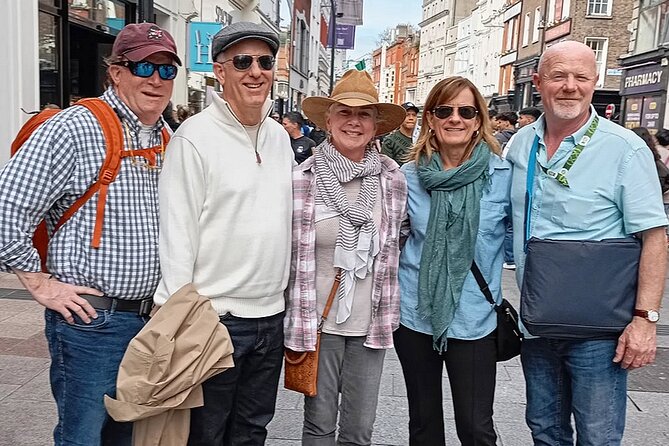
This tour is built like a smart reading of the city. Instead of only snapping photos, you walk through power centers, learning institutions, music culture, and memory sites, one after another, so the story keeps moving.
A private format also changes how you experience each stop. You can ask questions, pause for photos, and adjust pacing without worrying about slowing anyone else down.
Price-wise, it is listed at $144.03 per person for a 3-hour private walk. That can sound steep until you compare it to buying multiple tickets or paying for separate group tours the same day. For a couple, or a small group, the value is in having one licensed guide steer the time and energy.
More Walking Tours in Dublin
- Dublin Highlights and Hidden Gems Guided Walking Tour
★ 5.0 · 6,020 reviews - Dublin: Highlights and Hidden Gems Walking Tour
★ 4.9 · 2,140 reviews - 1916 Rebellion Walking Tour
★ 5.0 · 1,605 reviews
Starting at Molly Malone, then walking into the Dublin “song city”
You meet at Suffolk St at the Molly Malone Statue, one of Dublin’s best-known public characters. It connects to Dublin’s unofficial singing anthem, and it is the kind of landmark you instantly recognize, even if you missed the songs at home.
From the statue, you’re already in the zone where local identity is on display. The area around Molly Malone is walkable, lively, and easy to use as a starting point for figuring out the rest of the day.
Practical tip: if you arrive early, take a minute to look at street directions and traffic flow. This tour moves through central Dublin, and a quick orientation makes the walking feel easier.
Dublin Castle to Parliament House area: power, architecture, and dates you can place
One of the first major stops is Dublin Castle, a landmark tied to medieval administration and British rule. The first stone was laid in 1204, and the castle is framed as a bridge between long-ago Dublin and the more modern political story you’ll hear later.
The tour keeps the castle portion external, so you’re not forced into a ticketed stop to get the meaning. You still get the key historical context, which is exactly what a highlights walk should do.
Then the route comes around to the Parliament House area, where you can see the old House of Lords part of the complex (entry depends on times and opening). This is the kind of place where architecture helps you understand the political shifts without needing a textbook.
Here’s the value: when you connect Dublin Castle early to Parliament House later, you start to see how authority moved through the same streets. It turns the city from a set of buildings into a timeline you can walk.
Trinity College Dublin: why the campus matters even when you only walk it
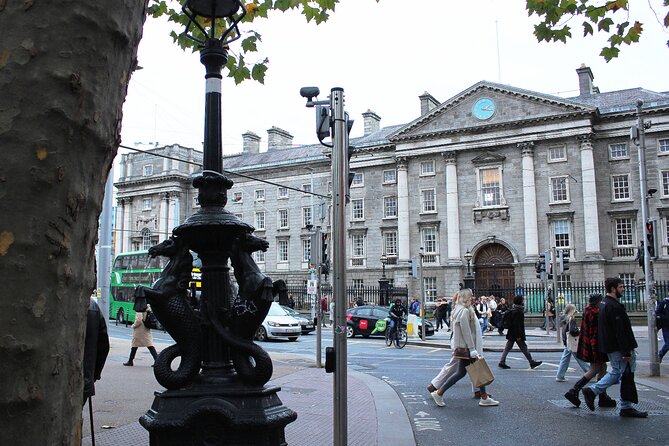
Trinity College Dublin is next, and the focus is an exterior stroll through the grounds. The school was founded in 1592 by Queen Elizabeth I, and it helps explain why Dublin became a center for learning and writing.
The campus is often described as one of the most beautiful places to visit, and even from outside, you feel why people linger. You’re also in the area where literary Dublin starts to make sense, because Trinity is a big part of that identity.
If you’re hoping to see inside major buildings, keep expectations flexible. This stop is framed as an external walk, and ticketed entry is not included in the experience.
A different sort of day out in Ireland:
- Dublin to Cliffs of Moher, including Wild Atlantic Way and Galway
★ 5.0 · 23,331 reviews - From Dublin: Cliffs of Moher, Burren & Galway City Day Tour
★ 4.8 · 18,888 reviews - Dublin: Guinness Storehouse Entry Ticket
★ 4.6 · 16,863 reviews - Dublin to Cliffs of Moher, Burren, Wild Atlantic Way, Galway Tour
★ 5.0 · 12,924 reviews
Temple Bar streets and the music wall mindset
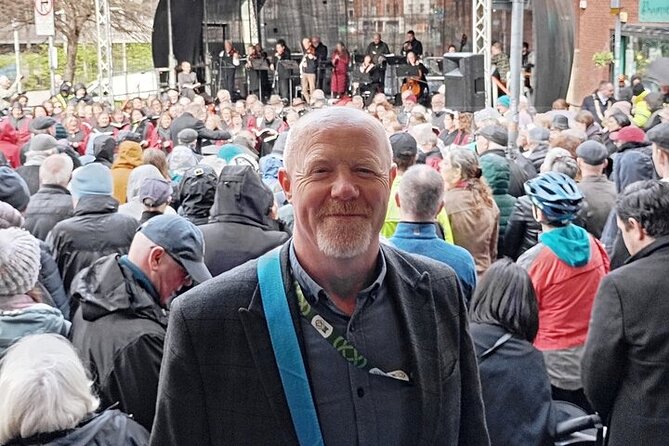
You’ll spend time in the Temple Bar area, which covers about 28 acres and is known for pubs and music culture. The key here is not just the pub name. It is the maze-like street feel, the side lanes, and the way music traditions show up in the rhythm of the neighborhood.
This is also a good moment to think about how Dublin uses sound. Ireland’s musical heritage shows up in places you might otherwise treat as tourist stops, and a good guide can point out what to listen for and where to go next.
Later, the tour adds the Wall of Fame, a landmark celebrating legendary Irish bands and singers. Even if you think you already know Dublin music, this is the kind of stop that helps you connect names to the broader story of Irish creativity.
Ha’penny Bridge: a short stop with a long memory

The Ha’penny Bridge is a quick one, but it’s worth treating like a mini viewpoint break. You stand on Dublin’s oldest foot bridge and look both east and west.
It is also tied to history, often described as one of the oldest wrought iron bridges in the world, with more than 200 years behind it. You get that sense of continuity just by watching traffic and river movement from the bridge.
This stop works well for photos, but it also works for getting your bearings. Once you can picture the river’s lines, the rest of central Dublin clicks faster.
College Green: the three-sided plaza where Dublin overlaps itself

College Green acts like a hub for the tour’s central story. It is a three-sided plaza, and the edges are where you see institutional Dublin stacked together.
On one side is the Bank of Ireland building, initially Ireland’s Parliament House. To the east is Trinity College Dublin, and to the south you find monuments and major Georgian and Victorian architecture.
This stop is more than scenery. It is a quick way to understand how Dublin compresses different eras into a tight walk. If you want one moment that feels like the city’s lesson plan, it’s College Green.
Powerscourt Townhouse Centre: the kind of stop you’d miss without a local eye
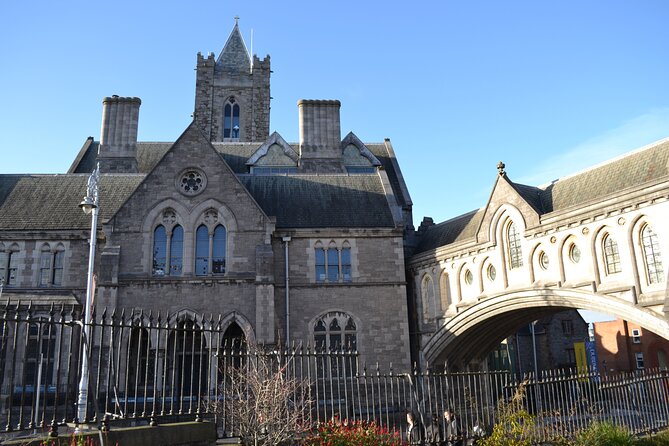
Powerscourt Townhouse Centre is a smaller, often overlooked interior stop in the city center. The townhouse dates to the 18th century, built as a residence for Richard Wingfield, the 2nd Viscount Powerscourt, and his wife Lady Elizabeth.
The space served as a social hub for Dublin’s elite, which is a helpful detail because it changes how you view the building. It stops being just a pleasant structure and becomes a clue about who shaped the city’s social life.
You also get a reminder that Dublin isn’t only about major monuments. Sometimes the most interesting story points are the ones that do not scream for attention.
St Stephen’s Green Park: a city reset in about 15 minutes
St Stephen’s Green is the tour’s green pause. The park covers about 22 acres and includes gardens, flower beds, lakes, and wildlife, plus sculptures and monuments tied to Irish history.
This stop is useful because it gives your legs a breather while keeping you in the center of Dublin. You can look around without racing, and you get a calmer feel right in the middle of sightseeing.
If you like photography, this is a good place to take a slower series of shots. It is easier to find nicer light here than along busy main streets.
Dubh Linn Gardens: brick patterns and a quieter Dublin side
Dubh Linn Gardens is another small, story-heavy pause. It is tucked in the heart of the city and is known for distinctive brickwork and Celtic patterns.
This is where a tour guide’s storytelling matters. Dublin’s creative details are often overlooked at street speed, but when you pause and understand what you’re looking at, the city feels more personal.
Keep your expectations realistic: this is not a long garden walk. It is a short stop that rewards attention and curiosity.
The Famine Memorial and Dame Lane: grief and sovereignty in walking distance
Then the route turns more serious. The Edward Delaney’s Famine Memorial is a tribute to over one million victims of the Great Irish Famine of 1845. It includes haunting sculptures of emaciated figures, meant to reflect suffering and displacement that fueled a massive Irish diaspora.
After that, you’ll hear about the 1916 Rising at Dame Lane. You view a copy of the original Irish Proclamation, issued April 24, 1916, during the Easter Rising against British rule. The proclamation declared an independent republic and included rights ideas such as equal citizenship and respect for people’s rights.
This pairing matters because it shows Ireland’s modern identity shaped by both trauma and political aspiration. By placing a famine memorial and proclamation stop in the same walking day, the tour gives you a clearer emotional and historical through-line.
If you get moved easily, allow yourself a moment to stand still. A good guide keeps the tone respectful, and you’ll feel that these stops are meant for reflection, not quick photos.
Wolfe Tone and Dublin’s independence story in public space
The tour includes Theobald Wolfe Tone, commemorated by a statue. He is described as one of the most influential figures in the quest for greater autonomy and independence from British rule, and often referenced as the father of Irish nationalism.
The statue ties him to the 1798 rebellion, which helps connect earlier political movements to what you see and hear about later in the day, like 1916.
This is another stop where you learn faster when you picture Dublin as public space. Statues, streets, and monuments are part of how the city tells its own story.
Planning your day around the walk, without making it stressful
This is a central Dublin walk, so plan around the time of day. If you start near midday, the lighting can be good for photos, but the streets may feel busy around Temple Bar.
Wear comfortable walking shoes, and bring a light layer. Dublin weather can shift quickly, and you do not want to lose the joy of the day because you got cold or wet.
Also, timing matters because some stops are quick external looks. You’re not spending long hours inside buildings. If you want extra time at any one site after the tour, you can use the guide’s city orientation tips and then branch off.
What you actually get from a private guide like David Ryan
The best part of this experience is not only the sights, it is the way the guide turns the sights into meaning.
In the sessions led by David Ryan, you’ll often hear about Dublin history, politics, art, literature, and folklore in an energetic way. One recurring theme is that he comes prepared with facts and dates, and he also uses songs and additional photos in a portfolio he brings along.
Even more practical, there is emphasis on what to do after. The guide shares recommendations for food, drinks, and traditional music venues, so your tour day does not end when the walk ends.
That matters because Dublin is a city where you can waste time picking places at random. A guide’s “do this next” suggestions can save you the awkward trial-and-error phase.
Who should book, and who might want a different style of tour
Book this if you want a high-impact Dublin overview in a short time and you care about context, not just checklists. It fits well for first-time visitors who want to understand why Dublin looks the way it does, and for repeat visitors who want better connections between neighborhoods and historical events.
It also fits well if you want flexibility, since you can choose an end point that matches your itinerary. The tour generally ends at College Green, but it can be adjusted, such as to align with a planned visit like Guinness Store House or to end near Christ Church Cathedral.
It might be less ideal if you hate walking or prefer museum-heavy time. This is a walk-first experience, and ticketed entries are not part of the included package.
Should you book this Dublin private walking tour
Yes, if you want a focused 3-hour day that links Dublin’s famous landmarks with the stories behind them. The price is high compared to public group tours, but for a private experience the value comes from one guide pacing the route, keeping you oriented, and helping you understand what you are seeing.
It is also a good choice if you plan to spend more time in the city right after. The orientation tips and recommendations can help you turn that extra time into something memorable, especially for traditional music and meal plans.
Skip it only if you want long indoor visits with paid admissions, or if your group needs a fully kid-friendly pace. Otherwise, this is the kind of Dublin walk that helps the city click fast.
FAQ
Where does the tour start?
The start point is at the Molly Malone Statue, Suffolk St, Dublin 2.
Where does the tour end?
The tour generally ends at College Green in Dublin. You can also choose a different end point that works with your itinerary.
Is this a private tour?
Yes. It is 100% private, meaning only your group participates.
How long is the tour?
It lasts about 3 hours.
What’s the price?
It is listed at $144.03 per person.
What language is the tour in?
The tour is offered in English.
Is pickup available?
Pickup is offered. You can meet at hotels listed, a city center accommodation, or at the central meeting point at the Molly Malone Statue.
Are tickets or paid attraction entrances included?
Entrance into ticketed or paid attractions is not included. The walking stops listed are free to access as described.
Do you offer group discounts?
Group discounts are offered.
Is it suitable for young children?
It is not recommended for babies or children under the age of 5 years.
Are there any cancellation options?
You can cancel for a full refund up to 24 hours in advance of the start time.
Freshly listed around Dublin
- Wicklow Mountains Private Day Tour including Glendalough★ 5.0 · 7 reviews
- Wicklow: Private Day Tour from Dublin★ 5.0 · 5 reviews
- Women Of Ireland: Trailblazers & Pioneers★ 5.0 · 4 reviews
- Wicklow tour of Glendalough★ 4.5 · 8 reviews
- Full Day Private Wicklow Tour★ 5.0 · 12 reviews
- Wicklow Mountains & Glendalough Luxury Private Day Tour★ 5.0 · 23 reviews
- Premium Irish Whiskey Tasting Hosted by Local Dublin Expert★ 5.0 · 77 reviews
- Whiskey Tasting Tour of Dublin★ 5.0 · 117 reviews
Walking Tours, compared.
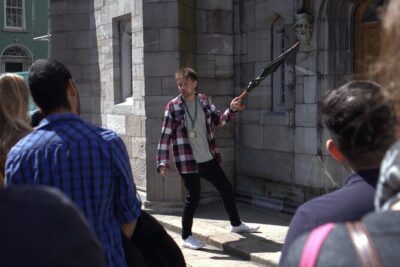
Dublin Highlights and Hidden Gems Guided Walking Tour
Read our review →


90 Minute Dublin Walking tour and Sightseeing tips
Read our review →

Historical 2-Hour Guided Walking Tour of Dublin
Read our review →
Dublin Traditional Irish 3 Course Meal Walking Tour with Local
Read our review →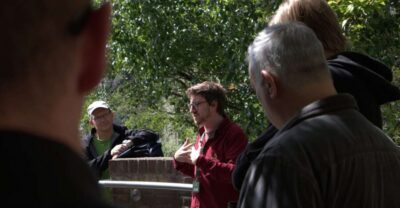
Browse the lists this tour appears in